
Showing posts with label risk. Show all posts
Showing posts with label risk. Show all posts
The Climatographers
I just came upon a blog written by long-time climate experts Mark Trexler and Laura Kosloff that I really like: The Climatographer. I'm not sure why I haven't bumped into it earlier. With their many years of experience and knowledge, they bring what I think is a very realistic view of the magnitude of the climate problem.
I have bookmarked the blog, and you should, too.

How is Renewable Energy like Swine Flu?

What I didn't tell him, because I thought of it later, is that renewables are more like swine flu vaccine than like a regular marketplace technology.
Deutsche Bank Crushes Skeptic Arguments
 Earlier this week, Deutsche Bank Climate Change Advisors issued the report, Climate Change: Addressing the Major Skeptic Arguments. In it, they deconstruct the main arguments skeptics have been using over the last decade to resist the need for stronger action on climate change. Climate Progress also has a good post on this paper.
The last paragraph of the Executive Summary reads:
Simply put, the science shows us that climate change due to emissions of greenhouse gases is a serious problem. Furthermore, due to the persistence of carbon dioxide in the atmosphere and the lag in response of the climate system, there is a very high probability that we are already heading towards a future where warming will persist for thousands of years. Failing to insure against that high probability does not seem a gamble worth taking. (emphasis added)
It deals with each of these skeptic arguments and finds all of them lacking:
- The climate has not warmed since 1998
- It's all a hoax
- Climate models are defective
- The signature of greenhouse gases causing warming is missing in the atmosphere
- The Medieval Warm Period was warmer than now
- GHG increases lag temperature increases, they don't cause them
- It's the sun
- Water vapor is way, way more important than CO2
- The sensitivity in the models is wrong
- Increased CO2 is actually good
- We've adapted before, so we can again
How I Decide What to Pay Attention to and What to Ignore When it Comes to Climate Change Research

"I'm curious how you might react to the attached short article. It was written to reach out to the average concerned non-scientific type about the illogic of the IPCC climate change models. It did impact public policy in Australia. Do you understand what the author is trying to say? It would seem fairly straightforward to a typical technical type but I'm afraid it would still cause someone's eyes to glaze over if they weren't a technical person. This is probably a good part of the communication problem for a fairly scientific issue?"
It's an interesting question, and I agreed with him that technical papers in general are generally going to be ignored by the public and often will be misunderstood (and misreported) by the media. However, science is a technical subject, and there is constant research going on, much of which is very important.
 |
| (photo by Leo Reynolds) |
1) Since I am generally not qualified to completely understand most technical papers, I leave it up to those who are. That means I am more likely to take into account research that has appeared in peer-reviewed publications such as Nature or Science. That means qualified scientists have looked at the research and deemed it worthy of publication. This particular paper has not been peer reviewed. It may be the greatest paper ever written about climate change or total hogwash. I'm not qualified to determine that, and I don't have the time to try to figure it out myself--even if I had the requisite knowledge.
2) There are dozens of papers on climate change published every month--many more if we include blog postings by anyone who wants to post. Some of them point to different conclusions than others. In my mind, each one represents just a single data point. Therefore I am not that interested in what any one particular paper might say, such as this one. What seems to me to be more prudent is to see what the overall research points to--the overwhelming preponderance. From everything I have seen over the last twenty years, the overwhelming preponderance is:
- Greenhouse gases are being added to our atmosphere by humans at an unprecedented rate
- These gases are causing our world to absorb more energy, making it warmer
- The outcome of this rapid warming is detrimental to humankind and civilization

So in conclusion, I rarely try to dig into any particular scientific paper myself, since I'm usually not qualified to really understand how the science was determined (I do read the conclusions, however). Then I wait to see what the highly respected organizations say--the ones that have generations of reputation to uphold--on the overall topic. Should those organizations change their statements regarding the overall science of climate change, then I will most certainly sit up and take notice. If however, they do not because of a single paper here or a blog post there, then I'll assume they have accorded that research its due and have determined that, by itself, it does not change the current overall understanding of the science.
Day Seven: Everything You Need to Know About Global Warming in Thirteen Days
 "7) The biggest cost of all from global warming is likely to be the accumulated loss of biodiversity. This features nowhere in economic cost-benefit analysis because, not surprisingly, it is hard to put a price on that which is priceless."
[This one of a series of daily posts I am drawing from Jeremy Grantham's Summer 2010 Investment letter. Mr. Grantham is on the Board of Directors of GMO LLC, a global investment firm with over $100 billion under management. Mr. Grantham takes a large, worldview perspective on investments--with an eye toward long-term trends. He is right-on about the impact of global warming.]
Day Six: Everything You Need to Know About Global Warming in Thirteen Days

Not only are the costs very reasonable, but the first half or so of the emissions reductions we need to make here in the US can be done so at a profit. It's my opinion, in fact, that by the time we make those investments and start reaping the benefits, that technology improvements and overall shifting of the economy to cleaner business will make a lot more of the emissions reductions profitable, too. And. . .if we take into account the value of some of the other things Mr. Grantham mentions above, like increased domestic employment, reduce dependency on energy in general and foreign energy specifically, and decreased pollution--then the positive returns are even greater.
----------------------------------------------
[This one of a series of daily posts I am drawing from Jeremy Grantham's Summer 2010 Investment letter. Mr. Grantham is on the Board of Directors of GMO LLC, a global investment firm with over $100 billion under management. Mr. Grantham takes a large, worldview perspective on investments--with an eye toward long-term trends. He is right-on about the impact of global warming.]
Day Five: Everything You Need to Know About Global Warming in Thirteen Days
"5) Skeptics argue that the wide range of uncertainty about future temperature changes lowers the need to act: “Why spend money when you’re not certain?” But since the penalties can rise at an accelerating rate at the tail, a wider range implies a greater risk (and a greater expected value of the costs.) This is logically and mathematically rigorous and yet is still argued."
Most debate over human-caused climate change centers around the science. But most of us are not equipped to discuss the details of the science. The question should really center around the idea of risk management, which is what Mr. Grantham is getting at above. Here is the best way of thinking about the question from that perspective that I have seen to date.
[This one of a series of daily posts I am drawing from Jeremy Grantham's Summer 2010 Investment letter. Mr. Grantham is on the Board of Directors of GMO LLC, a global investment firm with over $100 billion under management. Mr. Grantham takes a large, worldview perspective on investments--with an eye toward long-term trends. He is right-on about the impact of global warming.]
Most debate over human-caused climate change centers around the science. But most of us are not equipped to discuss the details of the science. The question should really center around the idea of risk management, which is what Mr. Grantham is getting at above. Here is the best way of thinking about the question from that perspective that I have seen to date.
[This one of a series of daily posts I am drawing from Jeremy Grantham's Summer 2010 Investment letter. Mr. Grantham is on the Board of Directors of GMO LLC, a global investment firm with over $100 billion under management. Mr. Grantham takes a large, worldview perspective on investments--with an eye toward long-term trends. He is right-on about the impact of global warming.]
Flying Into the Volcano Dust
 It's been front page news for a week, the Icelandic volcano sending up clouds of volcano ash, shutting down air traffic across Europe for more than a week and still disrupting it as this is being written. Our current course on addressing climate change (i.e., inaction) is the same as if air travel had just continued on as usual through the volcanic ash. When planes started falling out of the sky or landing with damaged engines, we could then get a good sense of the risk.
We did not continue business as usual with air travel in Europe when faced with a real but uncertain risk. In contrast, we barrel along--business as usual--changing our climate knowing that there are huge risks involved. Risks, in fact, far larger than those posed by the volcano and air travel thus far.
If the risk were only 1:1000 that a flight would crash due to volcanic ash, that would result in about two dozen crashes per day. We know the risk of catastrophic climate change is orders of magnitude greater than that, yet we continue to do very little to curtail our emission of greenhouse gases.
What is wrong with us?
How It All Ends
If you've never seen this video, I think it is one of the most powerfully convincing efforts to help people understand the need to take action on climate change. If you like it, you can also watch the more than 6 hours of additional supporting video in the "Expansion Pack." . . . . . but you don't have to.
If you are committed to fighting global climate change and liked the video, feel free to pass it on.
Swine Flu vs. Climate Change: Where are the Skeptics?
 The US is developing a $9 billion campaign to vaccinate Americans against the H1N1 virus, also known as swine flu. There's a lot of uncertainty about how extensively swine flu will manifest among the population, it's likely severity and how well the vaccination might work. However, none of those uncertainties has stopped us from working hard to develop the vaccination and the program to deliver it to millions of people. Why? Basic risk management. The possibility that the pandemic could be severe and affect millions of people are sound reasons to make significant investments to try to reduce that risk.
I haven't heard about a single Congressman or Senator railing against making this investment to ward off a potential future threat. But aren't some of these the same politicians who tell us that we shouldn't be taking action against climate change, because of uncertainties about how it will manifest, it's likely severity and how well solutions might work? The reason we need to take immediate action on climate change is exactly the same as the reason we are taking immediate action against H1N1: it's because risk management to reduce the risks of potential catastrophe tells us to do so. I searched several of the web sites of the most outspoken Senators against climate change to see if they had similar stands against addressing swine flu and found nothing. Am I the only one who sees this hypocrisy?
To see more on looking at climate change through a risk management lens, watch this video:
New View on Nuclear Power
As a long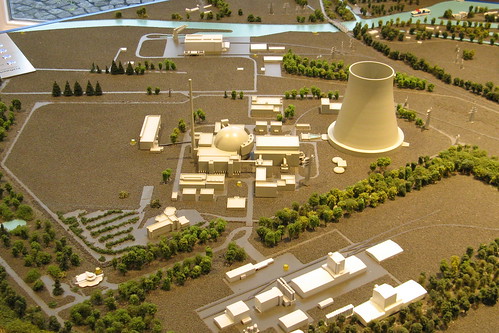 time environmentalist, I have for many years opposed the expansion of nuclear power as a source of energy production. I had a couple of reasons:
1) the long term risks associated with radioactive fuel and fuel waste were too uncertain and very long lasting--potentially thousands of years of possible harm.
2) it doesn't usually make economic sense without significant government subsidies--either direct subsidies or hidden subsidies in the form of government assuming significant risk.
Over the last couple of years, my thinking has evolved on this, and I am now in favor of giving nuclear power another chance. Here's why: climate change. Climate change makes the first issue balance out--unmitigated climate change results in environmental outcomes that last for thousands of years--the same timeframe as nuclear power (although different issues). On the second issue, the truth is time is running short, and we need to throw everything we have at climate change. That means some of the things we do will be "less economic" or "more economic" than others. The more we piddle around trying to find the perfect response, the longer we keep ourselves parked in the path of the climate-change freight train coming at us.
We need to do it all: renewable energy, international agreements, cap and trade, carbon taxes, energy efficiency, conservation, technology development, technology transfer,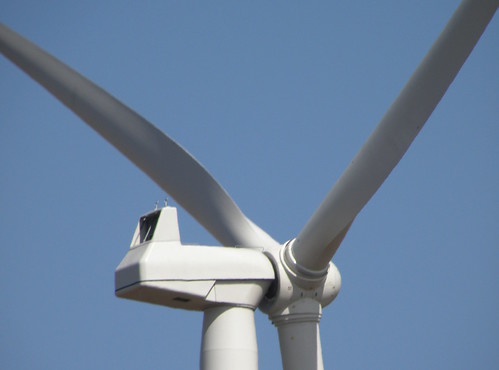 forest protection, forest replacement, land-use changes, biofuels, agricultural transformation, carbon capture, transportation system redesign, behavior changes, and everything else. Nuclear power is one of the things we have to have on the table along with all these others, too. The new DOE Secretary, Steven Chu, agrees; many others do not (Kessler, Joel Makower, Amory Lovins [yow! I shouldn't be arguing with him!]). In the long run, as we transform our energy system, then I strongly advocate phasing out nuclear in favor of less risky energy generation technologies. Even in the shorter run, by putting a price not only on carbon but on other externalities, it may become apparent that nuclear will only play small role. But for now, we have to pursue every option and move forward aggressively on reducing our greenhouse gas emissions, including developing more nuclear power.
------------------
photo attributions: http://www.flickr.com/photos/flokru/ / CC BY-NC 2.0
time environmentalist, I have for many years opposed the expansion of nuclear power as a source of energy production. I had a couple of reasons:1) the long term risks associated with radioactive fuel and fuel waste were too uncertain and very long lasting--potentially thousands of years of possible harm.
2) it doesn't usually make economic sense without significant government subsidies--either direct subsidies or hidden subsidies in the form of government assuming significant risk.
Over the last couple of years, my thinking has evolved on this, and I am now in favor of giving nuclear power another chance. Here's why: climate change. Climate change makes the first issue balance out--unmitigated climate change results in environmental outcomes that last for thousands of years--the same timeframe as nuclear power (although different issues). On the second issue, the truth is time is running short, and we need to throw everything we have at climate change. That means some of the things we do will be "less economic" or "more economic" than others. The more we piddle around trying to find the perfect response, the longer we keep ourselves parked in the path of the climate-change freight train coming at us.
We need to do it all: renewable energy, international agreements, cap and trade, carbon taxes, energy efficiency, conservation, technology development, technology transfer,
forest protection, forest replacement, land-use changes, biofuels, agricultural transformation, carbon capture, transportation system redesign, behavior changes, and everything else. Nuclear power is one of the things we have to have on the table along with all these others, too. The new DOE Secretary, Steven Chu, agrees; many others do not (Kessler, Joel Makower, Amory Lovins [yow! I shouldn't be arguing with him!]). In the long run, as we transform our energy system, then I strongly advocate phasing out nuclear in favor of less risky energy generation technologies. Even in the shorter run, by putting a price not only on carbon but on other externalities, it may become apparent that nuclear will only play small role. But for now, we have to pursue every option and move forward aggressively on reducing our greenhouse gas emissions, including developing more nuclear power.------------------
photo attributions: http://www.flickr.com/photos/flokru/ / CC BY-NC 2.0
Subscribe to:
Posts (Atom)

 Posts
Posts

