
Showing posts with label co2. Show all posts
Showing posts with label co2. Show all posts
The Climatographers
I just came upon a blog written by long-time climate experts Mark Trexler and Laura Kosloff that I really like: The Climatographer. I'm not sure why I haven't bumped into it earlier. With their many years of experience and knowledge, they bring what I think is a very realistic view of the magnitude of the climate problem.
I have bookmarked the blog, and you should, too.

Why the KXL pipeline should not be approved
 The EnergyCollective recently published a post (Why Should the Obama Administration Approve the Keystone XL Pipeline?) by John Miller. His post, as the title indicates, analyzes various aspects of the KXL pipeline in depth and comes to the conclusion that the benefits are greater than the costs.
I disagree.
Margaret Thatcher understood environmental dangers like climate change way back in 1989
Watch this video of Margaret Thatcher speaking on the dangers of environmental degradation and continuing human interference with nature. The section on climate change begins about 5:30.
Keep in mind that Ms. Thatcher was a staunch Conservative in the mold of Ronald Reagan (or perhaps he was in the mold of Margaret Thatcher. Well, either way.)
Keep in mind that Ms. Thatcher was a staunch Conservative in the mold of Ronald Reagan (or perhaps he was in the mold of Margaret Thatcher. Well, either way.)
Verizon's short-sightedness on saving energy
Today's Environmental Leader included a story entitled: Verizon Aims to Cut Carbon Intensity by Half by 2020 (also reported by Tree Hugger).
 I cannot turn this box off. If I unplug it, then it just draws down the battery until it's used up, which is senseless. I could pull the battery out, too, but that's a lot of effort--not as easy as pushing a power strip switch, which I can do with my wireless router.
"We're going to reduce our carbon footprint fifty percent," Lowell McAdam, Verizon's CEO, said in a sit-down with Bloomberg's Alix Steel. "We are now beginning to install solar arrays for powering our cell tower sites, and we've got our first data center powered by geothermal going in."I am a FIOS customer of Verizon in Northern Virginia. When we had Fios service installed, they placed a backup box unit in my house that draws a continuous 20 watts. 24/7/365. It does not power down when the battery is charged nor when there is no call for service. Just a constant 20 watts. That costs me (and all customers) about $20 per year. Not a lot, but a nice lunch.
Declines since 1982!!! (A global warming analogy)
I get the occasional email from my skeptic friend highlighting the latest study he's seen on Watt's Up With That and how the entirety of global warming science is thrown into question. He included this statement in his last email:
The main problem with this argument is that 15 years is too short a period to make any definitive statements about long-term trends. It also fails to take into account other forcings, such as solar intensity (down), ENSO (more La Nina lately) and increased aeresols from Chinese coal burning (study here).
For today, though, I want to show this:
". . .the earth has been cooling now for the last 15 years, while CO2 is still rising."This is a common meme among the skeptics: that there has been no warming recently despite increasing CO2, therefore global warming has stopped.
The main problem with this argument is that 15 years is too short a period to make any definitive statements about long-term trends. It also fails to take into account other forcings, such as solar intensity (down), ENSO (more La Nina lately) and increased aeresols from Chinese coal burning (study here).
For today, though, I want to show this:
Robert Samuelson redefines "reassuring," downplays seriousness of climate change
In a short op-ed piece today in the Washington Post (January 26, 2012), Robert Samuelson invokes a strange reality on our future.
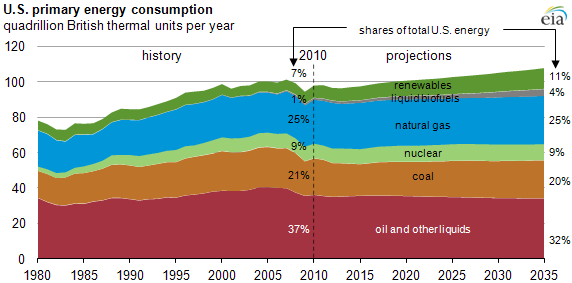 That's how he starts the article. Not that he supports the canceling of the KXL pipeline. No, he's optimistic because we will continue to burn fossil fuels on into the interminable future no matter what. That's the "better than you think" line.
"A week after President Obama denied the application for the Keystone XL pipeline — which would carry oil from Canada’s tar sands deposits in Alberta to U.S. refineries along the Gulf of Mexico — it’s time for an energy reality check. What does the future hold? It may be better than you think."
"Natural" equals Magic
 |
| photo from Purple Phoenix on flickr |
A friend of mine, in fact, has invoked this same idea to me: that climate change is some sort of natural artifact. This is the equivalent of saying that what is happening is caused by magic.
The heat wave and human influence on climate
Most of the United States just endured a remarkable heat wave in which hundreds of daily temperature records were broken and a number of all-time high records were also broken. Additionally, because of the flooding of the Mississippi River, humidity levels were also very high, leading to extremely high heat indexes, as high as 131 degrees in Knoxville, Iowa on Monday, July 18.
Turn out the lights!!!
Why is it that lights are on so much when they make no difference whatsoever? And sometimes they seem deliberately wasteful. I notice this all the time. Here's one example.
For the last couple of years I have attended a UConn football game on the Saturday after Thanksgiving in East Hartford CT at Rentschler Field. The game is played in the early afternoon. In both cases it was a bright, sunny day. Also in both cases, all the field lights were on from the time we arrived. I have no idea how early in the day they were lighted, but they were on for at least a couple of hours prior to the start of the game.
 According to the Rentschler Field website, there are 316 fixtures affixed on four light towers and above the press box. My best guess is that each fixture is 600-1200 watts. The lights were on for at least 6 hours. I'll concede that it may have been worthwhile to turn on some of the lights towards the end of the game as the sun got low, but they could have played the entire game without the lights, and no one would have noticed until at least 3:30 PM and probably not at all if they had never come on.
For the last couple of years I have attended a UConn football game on the Saturday after Thanksgiving in East Hartford CT at Rentschler Field. The game is played in the early afternoon. In both cases it was a bright, sunny day. Also in both cases, all the field lights were on from the time we arrived. I have no idea how early in the day they were lighted, but they were on for at least a couple of hours prior to the start of the game.
 | ||
| Note the bright sunshine. This was late in the game; earlier there were no shadows on the field at all |

Monday What's on the Web: Denial Depot
Each Monday I highlight other bloggers or web contributors who are making important or interesting contributions to climate, sustainability, transportation or market transformation. Check back each week for another installment.
---------------------------------------
Denial Depot is a satire blog, written by a satirical genius. Joe Romm finds the only flaw with this blog to be that he doesn't post enough--just a couple of posts per month on average.
This from his description of the blog:
Denial Depot
Blog Science for Real People
Denial Depot is a satire blog, written by a satirical genius. Joe Romm finds the only flaw with this blog to be that he doesn't post enough--just a couple of posts per month on average.
This from his description of the blog:
We stand unimpressed by "textbooks", "peer review journals" and so-called "facts". There are no facts, just dissenting opinion. We are infinitely small compared to nature and can't grasp anything as certain as a fact.If you have a sense of humor and a basic understanding of climate change science and politics, you should find this blog exceptionally entertaining. Here are a couple post links. Enjoy.
CO2 Prevents Heart Attacks
How To Cook A Graph SkepticalScience.com Style
Counterpoint: High-Speed Rail Can Be a Good Investment - Post 3: Greenhouse Gases
Last Monday, Robert J. Samuelson published an op-ed in the Washington Post suggesting the high-speed rail is nothing but pork. At one point he says:
 "What would we get for this huge investment? Not much. Here's what we wouldn't get: any meaningful reduction in traffic congestion, greenhouse gas emissions, air travel, oil consumption or imports."
I think he is wrong on all counts. I addressed commuting and air travel. Today I address greenhouse gas emissions.
Yesterday I made the point that intelligently designed and built high-speed rail can reduce air traffic. And it has in countries with good networks, like France, Spain and Japan. Every plane trip that is eliminated is going to save thousands of gallons of fuel. Every gallon of fuel contributes about 25 pounds of CO2 to our atmosphere. In yesterday's post I pointed out that the trains from Madrid to Barcelona had the capacity of as much as sixty flights per day between those two cities (in reality, since not every train is full, they are not currently offsetting that many flights--but they could). That's theoretically over 2000 tons of CO2 per day that could be saved. Less, of course, than whatever greenhouse gases are emitted from running the train.
As I pointed out yesterday, however, as our production of electricity gets cleaner, so will the emissions associated with running the train. So let's say 1/2 of that for now: 1000 tons per day. 365,000 tons per year. For one corridor. I would disagree with Mr. Samuelson's contention of no "meaningful reduction in greenhouse gases." Maybe that's not much to him, but I think it's meaningful.
"What would we get for this huge investment? Not much. Here's what we wouldn't get: any meaningful reduction in traffic congestion, greenhouse gas emissions, air travel, oil consumption or imports."I think he is wrong on all counts. I addressed commuting and air travel. Today I address greenhouse gas emissions.
Yesterday I made the point that intelligently designed and built high-speed rail can reduce air traffic. And it has in countries with good networks, like France, Spain and Japan. Every plane trip that is eliminated is going to save thousands of gallons of fuel. Every gallon of fuel contributes about 25 pounds of CO2 to our atmosphere. In yesterday's post I pointed out that the trains from Madrid to Barcelona had the capacity of as much as sixty flights per day between those two cities (in reality, since not every train is full, they are not currently offsetting that many flights--but they could). That's theoretically over 2000 tons of CO2 per day that could be saved. Less, of course, than whatever greenhouse gases are emitted from running the train.
As I pointed out yesterday, however, as our production of electricity gets cleaner, so will the emissions associated with running the train. So let's say 1/2 of that for now: 1000 tons per day. 365,000 tons per year. For one corridor. I would disagree with Mr. Samuelson's contention of no "meaningful reduction in greenhouse gases." Maybe that's not much to him, but I think it's meaningful.
Deutsche Bank Crushes Skeptic Arguments
 Earlier this week, Deutsche Bank Climate Change Advisors issued the report, Climate Change: Addressing the Major Skeptic Arguments. In it, they deconstruct the main arguments skeptics have been using over the last decade to resist the need for stronger action on climate change. Climate Progress also has a good post on this paper.
The last paragraph of the Executive Summary reads:
Simply put, the science shows us that climate change due to emissions of greenhouse gases is a serious problem. Furthermore, due to the persistence of carbon dioxide in the atmosphere and the lag in response of the climate system, there is a very high probability that we are already heading towards a future where warming will persist for thousands of years. Failing to insure against that high probability does not seem a gamble worth taking. (emphasis added)
It deals with each of these skeptic arguments and finds all of them lacking:
- The climate has not warmed since 1998
- It's all a hoax
- Climate models are defective
- The signature of greenhouse gases causing warming is missing in the atmosphere
- The Medieval Warm Period was warmer than now
- GHG increases lag temperature increases, they don't cause them
- It's the sun
- Water vapor is way, way more important than CO2
- The sensitivity in the models is wrong
- Increased CO2 is actually good
- We've adapted before, so we can again
Day Four: Everything You Need to Know About Global Warming in Thirteen Days
"4) The uncertainties arise when it comes to the interaction between greenhouse gases and other factors in the complicated climate system. It is impossible to be sure exactly how quickly or how much the temperature will rise. But, the past can be measured. The temperature has indeed steadily risen over the past century while greenhouse gas levels have increased. But the forecasts still range very widely for what will happen in the future, ranging from a small but still potentially harmful rise of 1 to 2 degrees Fahrenheit to a potentially disastrous level of +6 to +10 degrees Fahrenheit within this century.
 A warmer atmosphere melts glaciers and ice sheets, and causes global sea levels to rise. A warmer atmosphere also contains more energy and holds more water, changing the global occurrences of storms, floods, and other extreme weather events."
Most of the scientists now agree that the low end of the range Mr. Grantham suggests here is unlikely and that the high end is more likely. The biggest question mark is not the physics and chemistry, though: it's sociology. So much depends on if we humans can slow emissions enough to stop concentrations at 450 ppm or 560 ppm (double pre-industrial levels) or if we end up with concentrations closer to 1000 ppm. Right now, the odds of slowing and reversing emissions fast enough or significantly enough seems small. The human factor, then, is the most important variable that will effect the eventual amount of climate change humans will experience--not the science. The science, in fact, keeps getting more and more dire.
[This one of a series of daily posts I am drawing from Jeremy Grantham's Summer 2010 Investment letter. Mr. Grantham is on the Board of Directors of GMO LLC, a global investment firm with over $100 billion under management. Mr. Grantham takes a large, worldview perspective on investments--with an eye toward long-term trends. He is right-on about the impact of global warming.]
Most of the scientists now agree that the low end of the range Mr. Grantham suggests here is unlikely and that the high end is more likely. The biggest question mark is not the physics and chemistry, though: it's sociology. So much depends on if we humans can slow emissions enough to stop concentrations at 450 ppm or 560 ppm (double pre-industrial levels) or if we end up with concentrations closer to 1000 ppm. Right now, the odds of slowing and reversing emissions fast enough or significantly enough seems small. The human factor, then, is the most important variable that will effect the eventual amount of climate change humans will experience--not the science. The science, in fact, keeps getting more and more dire.
[This one of a series of daily posts I am drawing from Jeremy Grantham's Summer 2010 Investment letter. Mr. Grantham is on the Board of Directors of GMO LLC, a global investment firm with over $100 billion under management. Mr. Grantham takes a large, worldview perspective on investments--with an eye toward long-term trends. He is right-on about the impact of global warming.]
Day Two: Everything You Need to Know About Global Warming in Thirteen Days
"2) One of the properties of CO2 is that it creates a greenhouse effect and, all other things being equal, an increase in its concentration in the atmosphere causes the Earth’s temperature to rise. This is just physics. (The amount of other greenhouse gases in the atmosphere, such as methane, has also risen steeply since industrialization, which has added to the impact of higher CO2 levels.)"
I like this statement, because it is just so simple. CO2 holds heat. Here's a simple experiment showing that very effect:
More CO2; more heat. Simple. We humans are adding many millions of tons of CO2 to our atmosphere each day, so it's not a hard stretch to expect that eventually our world would retain more heat. Which it has. It's about 1 degree Celsius warmer now than at the beginning of the twentieth century.
[This one of a series of daily posts I am drawing from Jeremy Grantham's Summer 2010 Investment letter. Mr. Grantham is on the Board of Directors of GMO LLC, a global investment firm with over $100 billion under management. Mr. Grantham takes a large, worldview perspective on investments--with an eye toward long-term trends. He is right-on about the impact of global warming.]
I like this statement, because it is just so simple. CO2 holds heat. Here's a simple experiment showing that very effect:
More CO2; more heat. Simple. We humans are adding many millions of tons of CO2 to our atmosphere each day, so it's not a hard stretch to expect that eventually our world would retain more heat. Which it has. It's about 1 degree Celsius warmer now than at the beginning of the twentieth century.
[This one of a series of daily posts I am drawing from Jeremy Grantham's Summer 2010 Investment letter. Mr. Grantham is on the Board of Directors of GMO LLC, a global investment firm with over $100 billion under management. Mr. Grantham takes a large, worldview perspective on investments--with an eye toward long-term trends. He is right-on about the impact of global warming.]
Day One: Everything You Need to Know About Global Warming in 13 Days
"1) The amount of carbon dioxide (CO2) in the atmosphere, after at least several hundred thousand years of remaining within a constant range, started to rise with the advent of the Industrial Revolution. It has increased by almost 40% and is rising each year. This is certain and straightforward."
[This is the first in a series of daily posts I am drawing from Jeremy Grantham's Summer 2010 Investment letter. Mr. Grantham is on the Board of Directors of GMO LLC, a global investment firm with over $100 billion under management. Mr. Grantham takes a large, worldview perspective on investments--with an eye toward long-term trends. He is right-on about the impact of global warming.
In his summer newsletter he wrote an essay called Everything You Need to Know About Global Warming in Five Minutes. He made thirteen bullet points. I will reprint each bullet point one per day (see above) and comment on it. Enjoy.]
 No one debates the rise in CO2--even the harshest skeptics. The Keeling Curve is probably the most well known graphic regarding global warming.Current CO2 atmospheric concentrations are above 390 parts per million. Pre-industrial levels were approximately 280 parts per million.
Mr. Grantham's point that it is rising each year is correct. What is more concerning, however, is that the rate of increase is also increasing--that is, the rise in concentration of CO2 in the atmosphere is accelerating.
[This is the first in a series of daily posts I am drawing from Jeremy Grantham's Summer 2010 Investment letter. Mr. Grantham is on the Board of Directors of GMO LLC, a global investment firm with over $100 billion under management. Mr. Grantham takes a large, worldview perspective on investments--with an eye toward long-term trends. He is right-on about the impact of global warming.
In his summer newsletter he wrote an essay called Everything You Need to Know About Global Warming in Five Minutes. He made thirteen bullet points. I will reprint each bullet point one per day (see above) and comment on it. Enjoy.]
No one debates the rise in CO2--even the harshest skeptics. The Keeling Curve is probably the most well known graphic regarding global warming.Current CO2 atmospheric concentrations are above 390 parts per million. Pre-industrial levels were approximately 280 parts per million.Mr. Grantham's point that it is rising each year is correct. What is more concerning, however, is that the rate of increase is also increasing--that is, the rise in concentration of CO2 in the atmosphere is accelerating.
Monday What's on the Web: Skeptical Science
Every Monday I highlight other bloggers or web contributors who are making important or interesting contributions to climate, sustainability, transportation or market transformation. Check back each week for another installment.
---------------------------- Skeptical Science is a website and blog devoted to cataloging and responding to the arguments that are brought up in the media and elsewhere that run counter to the view that climate change is happening and that humans are responsible. The web site is run and maintained by John Cook, an Australian. The goal of the web site is to explain what peer-reviewed science has to say about climate change and apply it against the arguments that are frequently seen in the media and on the web. Currently he catalogs 114 of these arguments. The site does not get involved in any of the political arguments.
For instance, some of the common arguments he deals with are:
The home page is an active blog that focuses its discussion on the science of climate change. This blog is widely read--so much so, in fact, that Christopher Monckton, the infamous climate denier, has recently responded directly to a post on the site.
----------------------------
Skeptical Science is a website and blog devoted to cataloging and responding to the arguments that are brought up in the media and elsewhere that run counter to the view that climate change is happening and that humans are responsible. The web site is run and maintained by John Cook, an Australian. The goal of the web site is to explain what peer-reviewed science has to say about climate change and apply it against the arguments that are frequently seen in the media and on the web. Currently he catalogs 114 of these arguments. The site does not get involved in any of the political arguments.For instance, some of the common arguments he deals with are:
The home page is an active blog that focuses its discussion on the science of climate change. This blog is widely read--so much so, in fact, that Christopher Monckton, the infamous climate denier, has recently responded directly to a post on the site.
Climate Decade in Review - Post 28: Highest Winter Temperature Ever in Buenos Aires
August 31 , 2009 – Buenos Aires records the hottest winter temperature ever: 94 degrees Fahrenheit.
The Southern Hemisphere experiences winter during the months of June, July and August--opposite of the Northern Hemisphere. So August in Buenos Aires is their winter. Buenos Aires has a mild climate and does not experience either extremely low nor high temperatures. The average high temperature in August is 63 degrees F.
One of the indicators that global warming is caused by higher concentrations of greenhouse gases rather than natural changes, such as greater solar radiance, is that nighttime and winter temperatures will rise more than summer and daytime temperatures. So the fact that Buenos Aires experienced its highest winter temperature in recorded history is consistent with what would be expected in a world with higher greenhouse gas concentrations.
====================
This is one in the series of "Decade in Review" posts on this blog that began in January 2010. These posts present climate-change-related events that occurred during the 00's, the warmest decade in recorded history.
, 2009 – Buenos Aires records the hottest winter temperature ever: 94 degrees Fahrenheit.The Southern Hemisphere experiences winter during the months of June, July and August--opposite of the Northern Hemisphere. So August in Buenos Aires is their winter. Buenos Aires has a mild climate and does not experience either extremely low nor high temperatures. The average high temperature in August is 63 degrees F.
One of the indicators that global warming is caused by higher concentrations of greenhouse gases rather than natural changes, such as greater solar radiance, is that nighttime and winter temperatures will rise more than summer and daytime temperatures. So the fact that Buenos Aires experienced its highest winter temperature in recorded history is consistent with what would be expected in a world with higher greenhouse gas concentrations.
====================
This is one in the series of "Decade in Review" posts on this blog that began in January 2010. These posts present climate-change-related events that occurred during the 00's, the warmest decade in recorded history.
Climate Decade in Review - Post 27: US Emissions of CO2 Exceed 6 Billion Tons
2004 - US CO2 emissions exceed 6 billion tons for the first time.
Long the world's leader in highest CO2 emissions, the United States' emissions of CO2 continued to grow during the decade of the 00's, surpassing 6 billion tons in calendar year 2004 (according to EPA's official GHG inventory). Growth in CO2 emission in the United States was slower in the 00's than during the 90's, however. In 1990, US CO2 emissions were slightly more than 5 billion tons and grew to 5.94 billion tons by 2000.
The 1990 date is important, because Kyoto uses 1990 as a baseline. Many other countries and the bulk of international negotiations also use 1990 as a baseline against which they strive to achieve emission reductions. The United States will have to reduce emissions almost 20% just to get back to the same emissions level as 1990.
====================
This is one in the series of "Decade in Review" posts on this blog that began in January 2010. These posts present climate-change-related events that occurred during the 00's, the warmest decade in recorded history.
(Photo attribution:http://www.flickr.com/photos/freefoto/ / CC BY-NC 2.0)
- US CO2 emissions exceed 6 billion tons for the first time.Long the world's leader in highest CO2 emissions, the United States' emissions of CO2 continued to grow during the decade of the 00's, surpassing 6 billion tons in calendar year 2004 (according to EPA's official GHG inventory). Growth in CO2 emission in the United States was slower in the 00's than during the 90's, however. In 1990, US CO2 emissions were slightly more than 5 billion tons and grew to 5.94 billion tons by 2000.
The 1990 date is important, because Kyoto uses 1990 as a baseline. Many other countries and the bulk of international negotiations also use 1990 as a baseline against which they strive to achieve emission reductions. The United States will have to reduce emissions almost 20% just to get back to the same emissions level as 1990.
====================
This is one in the series of "Decade in Review" posts on this blog that began in January 2010. These posts present climate-change-related events that occurred during the 00's, the warmest decade in recorded history.
(Photo attribution:http://www.flickr.com/photos/freefoto/ / CC BY-NC 2.0)
Climate Decade in Review - Post 20: AAPG revises Climate Change Statement Leaving No Scientific Bodies Out
July 2007 - The American Association of Petroleum Geologists revised their official statement in relation to human-induced climate change. AAPG was the last reputable scientific body in the world to still have an official position that ran counter to the scientific consensus on climate change.
As of that moment, there no longer any credible scientific bodies in the world that did not acknowledge the contribution of humans to the increase in greenhouse gases.
As one might expect, this society has a large number of oil and gas companies and their employees as members, and efforts to significantly reduce greenhouse gases are likely to have a negative impact on their industry. Nonetheless, a number of their members threatened to quit the Their official statement was wishy-washy but not contrary to the scientific consensus, basically punting on whether the additional CO2 humans are adding to the atmosphere is actually causing the climate to warm.
=================
This is one in the series of "Decade in Review" posts on this blog that began in January 2010. These posts present climate-change-related events that occurred during the 00's, the warmest decade in recorded history.
As of that moment, there no longer any credible scientific bodies in the world that did not acknowledge the contribution of humans to the increase in greenhouse gases.
As one might expect, this society has a large number of oil and gas companies and their employees as members, and efforts to significantly reduce greenhouse gases are likely to have a negative impact on their industry. Nonetheless, a number of their members threatened to quit the Their official statement was wishy-washy but not contrary to the scientific consensus, basically punting on whether the additional CO2 humans are adding to the atmosphere is actually causing the climate to warm.
=================
This is one in the series of "Decade in Review" posts on this blog that began in January 2010. These posts present climate-change-related events that occurred during the 00's, the warmest decade in recorded history.
Climate Decade in Review - Post 13: Wind Energy in US Grows Rapidly
August 2006 - Wind energy capacity in the United States reached 10,000 Megawatts (MW), enough to power 2.5 million homes, according to the American Wind Energy Association (AWEA).
Wind energy capacity at the beginning of the decade was about 2,500 MW, meaning that installed capacity quadrupled in six years. Wind energy was the fastest growing source of new electricity supply for the decade. By the end of the decade, total US installed wind capacity was approximately 35,000 MW--showing phenomenal growth of well over 30% per year.
Wind energy is one of the more attractive renewable energy options. Electricity generation from wind is entirely carbon free, and the growth of the wind industry during the 00's has helped bring prices down to be competitive with fossil fuel generation in many cases. Each kilowatt-hour of wind energy that replaces a kWh of coal-generated electricity reduces carbon dioxide emissions by more than a pound. (A typical household will use 25-40 kWh per day of electricity.)
=================
This is one in the series of "Climate Decade in Review" posts on this blog that began in January 2010. These posts present climate-change-related events that occurred during the 00's, the warmest decade in recorded history.
2006 - Wind energy capacity in the United States reached 10,000 Megawatts (MW), enough to power 2.5 million homes, according to the American Wind Energy Association (AWEA).Wind energy capacity at the beginning of the decade was about 2,500 MW, meaning that installed capacity quadrupled in six years. Wind energy was the fastest growing source of new electricity supply for the decade. By the end of the decade, total US installed wind capacity was approximately 35,000 MW--showing phenomenal growth of well over 30% per year.
Wind energy is one of the more attractive renewable energy options. Electricity generation from wind is entirely carbon free, and the growth of the wind industry during the 00's has helped bring prices down to be competitive with fossil fuel generation in many cases. Each kilowatt-hour of wind energy that replaces a kWh of coal-generated electricity reduces carbon dioxide emissions by more than a pound. (A typical household will use 25-40 kWh per day of electricity.)
=================
This is one in the series of "Climate Decade in Review" posts on this blog that began in January 2010. These posts present climate-change-related events that occurred during the 00's, the warmest decade in recorded history.
Subscribe to:
Posts (Atom)


 Posts
Posts

