 My favorite moment of the entire meeting was when the President of Pepco Holdings greeted everyone by saying, "I want to take credit for the early blooming of the cherry blossoms." I'm pretty sure he did not realize the irony of his own statement, what with the significant contribution the electricity sector makes to climate change. (One could point out the Pepco owns no generation, but I still found his statement amusing.)
Showing posts with label electricity. Show all posts
Showing posts with label electricity. Show all posts
Observations at Powering the People 2.0
The Edison Foundation held their 1-day meeting, Powering the People 2.0, on Thursday, March 22. I was able to visit for a short while, visiting the electric vehicles outside, listening to the introductory speakers and first panel, and visiting the area they called "Innovation Avenue."
My favorite moment of the entire meeting was when the President of Pepco Holdings greeted everyone by saying, "I want to take credit for the early blooming of the cherry blossoms." I'm pretty sure he did not realize the irony of his own statement, what with the significant contribution the electricity sector makes to climate change. (One could point out the Pepco owns no generation, but I still found his statement amusing.)
My favorite moment of the entire meeting was when the President of Pepco Holdings greeted everyone by saying, "I want to take credit for the early blooming of the cherry blossoms." I'm pretty sure he did not realize the irony of his own statement, what with the significant contribution the electricity sector makes to climate change. (One could point out the Pepco owns no generation, but I still found his statement amusing.)
Verizon's short-sightedness on saving energy
Today's Environmental Leader included a story entitled: Verizon Aims to Cut Carbon Intensity by Half by 2020 (also reported by Tree Hugger).
 I cannot turn this box off. If I unplug it, then it just draws down the battery until it's used up, which is senseless. I could pull the battery out, too, but that's a lot of effort--not as easy as pushing a power strip switch, which I can do with my wireless router.
"We're going to reduce our carbon footprint fifty percent," Lowell McAdam, Verizon's CEO, said in a sit-down with Bloomberg's Alix Steel. "We are now beginning to install solar arrays for powering our cell tower sites, and we've got our first data center powered by geothermal going in."I am a FIOS customer of Verizon in Northern Virginia. When we had Fios service installed, they placed a backup box unit in my house that draws a continuous 20 watts. 24/7/365. It does not power down when the battery is charged nor when there is no call for service. Just a constant 20 watts. That costs me (and all customers) about $20 per year. Not a lot, but a nice lunch.
Transforming the market for electric cars: The solution to "Range Anxiety"
Building the market for electric cars presents a tricky conundrum: charging. People are less likely to want to buy an electric car if they are uncertain about being able to get it charged, and charging stations are not likely to pop up to serve these vehicles if there are few electric cars around. This fear of running out of charge, "range anxiety," is a significant obstacle to more widespread adoption. I believe a forward-looking gas company can help break this logjam while also improving their market positioning. Here's how.

Suppose one company, let's say Shell, installed chargers in every one of their stations in the Greater Washington area (or another region where there are electric cars on the road). The key here is to install in every station, even though many will hardly get used. It's a marketing strategy: make your stations synonymous with electric charging. One company getting out ahead on this could create a very long lasting market advantage. Put a charger in every station and make that information common knowledge to everyone. The marketing has to be comprehensive, so that everyone knows those gas stations have charging stations; it becomes common knowledge. The stations and the marketing are loss leaders; a marketing strategy that pays off in more than one way.
Suppose one company, let's say Shell, installed chargers in every one of their stations in the Greater Washington area (or another region where there are electric cars on the road). The key here is to install in every station, even though many will hardly get used. It's a marketing strategy: make your stations synonymous with electric charging. One company getting out ahead on this could create a very long lasting market advantage. Put a charger in every station and make that information common knowledge to everyone. The marketing has to be comprehensive, so that everyone knows those gas stations have charging stations; it becomes common knowledge. The stations and the marketing are loss leaders; a marketing strategy that pays off in more than one way.
Electricity industry executives are either delusional or math illiterate. You choose.
The consulting firm, Black & Veatch conducts a survey (pdf) of the electricity industry each year, which provides insight into what the industry itself believes is happening and will happen in the future. (Thanks to Grist for bringing this to my attention).
One of the questions and answers in particular caught my attention, because it struck me as being totally absurd. Upon further digging, it turns out I was right; it is absurd.
The question asked of the executives was:
Here is the graph showing how they answered.

One of the questions and answers in particular caught my attention, because it struck me as being totally absurd. Upon further digging, it turns out I was right; it is absurd.
 |
| Nissan Leaf |
The question asked of the executives was:
What proportion of your annual energy load do you expect electric vehicles to represent by the end of each of the following years?
Here is the graph showing how they answered.
Innovations Towards Zero. Upcoming event at House of Sweden re: electrification and safety in vehicles

9th of June, 2011 ∙ House of Sweden ∙ 2900 K Street, NW ∙ Washington, DC
Join us for a seminar that will focus on the latest findings on safety and electrification of
vehicles and discuss how manufacturers, government and the public can work together to
reduce emissions as well as reduce fatalities and injuries on our roads.
Agenda
Exhibition will include:
Washington Post is shortsighted in its dismissal of high-speed rail: Post 1
 |
| from scoutjacobus on flickr |
However, I'd like to make even one more point that I think speaks to our need to move aggressively on high speed rail in appropriate corridors. (I will point out that I do not agree that we should bring high speed rail to 80% of the population of the country, as President Obama has stated. Rather than set up an arbitrary number like that, we should focus our energies in areas where we can most effectively offset regional air travel.)
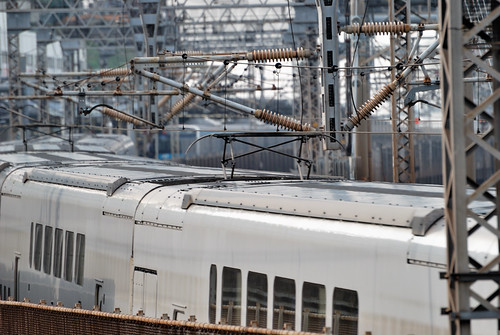 |
| from ykanzawa1999 on flickr |
Oil is certain to become more expensive and may also become scarcer over the next decade or two, making our existing investments in highways and air travel look like the dot-com boom of the late 90's. Better to diversify our investments now, since it takes time to get them built and operating--time that we don't really have enough of.
A follow up post addressing another key flaw in their argument will be forthcoming shortly.
Monday What's on the Web: Coal Tattoo
Every Monday I highlight other bloggers or web contributors who are making important or interesting contributions to climate, sustainability, transportation or market transformation. Check back each week for another installment.
----------------------------
 I like the name "Coal Tattoo" for this blog hosted by the Charleston Gazette. I think it captures the idea of how coal creates a permanent mark on our landscape. This blog covers the coal industry in pretty close detail. Its primary author is Ken Ward, Jr., who has been covering the coal industry for about two decades. Last fall, Joe Romm at Climate Progress singled out Mr. Ward as a "Game Changer" in the fight against climate change. Here's the one-sentence description they use to describe the blog:
----------------------------
This Charleston Gazette blog attempts to build on the newspaper’s longtime coverage of all things coal — with a focus on mountaintop removal, coal-mine safety and climate change.The blog is quite active and very up to date, averaging about one new post almost every day. Here are some recent representative posts:
Coal’s impacts: New study sorts out good and bad
New Harvard study: Fully accounting for coal’s environmental impacts would triple its costs
Obama budget proposes cuts in OSMRE budget, changes in abandoned mine cleanup program
Judge tosses Aracoma widows’ case against MSHA
Big thanks to Ken Ward for the work he is doing on behalf of the people of the coal mining regions, the workers, and everyone on the planet who is dependent on a stable climate.
How to Effectively Improve Utility Reliability (even though they're monopolies)

The problem with utility reliability is that the costs of outages are primarily borne by the customers--they are externalized from the utility. The only costs utilities pay are a tiny loss of revenue and the chewing out they get in the press. The difference between a 1-hour outage and a 5-hour outage may cost Pepco a dollar or less in lost revenue, but it might cost a residential customer a refrigerator full of food. I recall after Tropical Storm Isabel came through in 2003, I walked past my nearby Baskin-Robbins about 24 hours after the power went out. They had to throw out their entire inventory of ice cream: thousand of dollars worth. They were just one of thousands of businesses that suffered major financial losses due to the power outages from that storm.
The article mentioned that some customers are spending $9,400 to install natural gas-powered generators in their homes. If 10,000 customers do that, it's a total expense of $94,000,000 incurred by them to reduce the risks associated with outages. Unlike, say, cell phone service, customers cannot choose to switch to a different utility for their electric distribution service, so there is no competition to raise the bar for reliability.
Pepco is regulated by the public utility commissions in DC and Maryland. The simplest way to get Pepco to make improvements is for these commissions to internalize the costs of outages with a simple mechanism.
 |
| Photo from Keo 101 on Flickr |
The utility commissions would build into Pepco's rate case the expected costs to the utility for achieving "average" reliabilty based on regional or national statistics. Or to return to their own reliability rate from 2004. If Pepco exceeds that, then their investors would reap extra profit; if they fall short, their investors pay. This is fair, since the customers who are directly affected are the ones who get the reimbursements if Pepco falls short, while the customer base as a whole would pay a slight premium for increased reliability if they exceed the goals.
The commission could set the bar anywhere they like. One idea would be to expect them to achieve "average" by 2015 and then increase the reliability expectation by some percentage each year, incentivizing Pepco to continuously improve.
What about "Acts of God?" I would propose that there are no "Acts of God." It's up to the utility to prepare for big storms and other large-scale disruptions. This is, in fact, the business they are in. Hopefully the risk of enormous payments would get them to start looking more seriously at undergrounding, redundancy, smart grid and other risk abatement strategies. They could purchase re-insurance for major losses. That would be good, because the re-insurer would likely be tougher on Pepco than the PUCs, since they would be scrutinizing Pepco's actions to make sure they reduce their own risks.
This customer rebate mechanism is very simple and easy to understand. The financial incentives are exactly aligned with the desired outcomes. The utility is rewarded for exceeding its goals and penalized for falling short. It incentivizes them to go beyond the minimum and look for creative solutions.
For the last five years, Pepco has gotten fat and happy while allowing its reliability to go to pot. Sure, they've had a couple of uncomfortable press conferences, but no real penalties. A mechanism like this would keep them from ever letting it happen again.
Monday What's on the Web: Cleantech Blog
Each Monday I highlight other bloggers or web contributors who are making important or interesting contributions to climate, sustainability, transportation or market transformation. Check back each week for another installment.
----------------------------------------
 Cleantech blog has been around since 2005, making it one of the older environmental blogs around. There are about 2 dozen contributors to the blog, which covers the cleantech arena. Key bloggers include Richard Stuebi, who has been with the blog since the beginning and Neal Dikeman, who has a background in banking and finance and likes to focus on the types of technologies that can transform our economy in positive ways.
Recent posts include:
Recent posts include:
The “Smart Grid”: An Overview
GE Buys 12,000 Chevrolet Volts
Cleantech Meets Heavy Steel
Additionally, if you have ideas and opinions related to the clean tech sector, they may welcome you as a blogger.
Counterpoint: High-Speed Rail Can Be a Good Investment - Post 3: Greenhouse Gases
Last Monday, Robert J. Samuelson published an op-ed in the Washington Post suggesting the high-speed rail is nothing but pork. At one point he says:
 "What would we get for this huge investment? Not much. Here's what we wouldn't get: any meaningful reduction in traffic congestion, greenhouse gas emissions, air travel, oil consumption or imports."
I think he is wrong on all counts. I addressed commuting and air travel. Today I address greenhouse gas emissions.
Yesterday I made the point that intelligently designed and built high-speed rail can reduce air traffic. And it has in countries with good networks, like France, Spain and Japan. Every plane trip that is eliminated is going to save thousands of gallons of fuel. Every gallon of fuel contributes about 25 pounds of CO2 to our atmosphere. In yesterday's post I pointed out that the trains from Madrid to Barcelona had the capacity of as much as sixty flights per day between those two cities (in reality, since not every train is full, they are not currently offsetting that many flights--but they could). That's theoretically over 2000 tons of CO2 per day that could be saved. Less, of course, than whatever greenhouse gases are emitted from running the train.
As I pointed out yesterday, however, as our production of electricity gets cleaner, so will the emissions associated with running the train. So let's say 1/2 of that for now: 1000 tons per day. 365,000 tons per year. For one corridor. I would disagree with Mr. Samuelson's contention of no "meaningful reduction in greenhouse gases." Maybe that's not much to him, but I think it's meaningful.
"What would we get for this huge investment? Not much. Here's what we wouldn't get: any meaningful reduction in traffic congestion, greenhouse gas emissions, air travel, oil consumption or imports."I think he is wrong on all counts. I addressed commuting and air travel. Today I address greenhouse gas emissions.
Yesterday I made the point that intelligently designed and built high-speed rail can reduce air traffic. And it has in countries with good networks, like France, Spain and Japan. Every plane trip that is eliminated is going to save thousands of gallons of fuel. Every gallon of fuel contributes about 25 pounds of CO2 to our atmosphere. In yesterday's post I pointed out that the trains from Madrid to Barcelona had the capacity of as much as sixty flights per day between those two cities (in reality, since not every train is full, they are not currently offsetting that many flights--but they could). That's theoretically over 2000 tons of CO2 per day that could be saved. Less, of course, than whatever greenhouse gases are emitted from running the train.
As I pointed out yesterday, however, as our production of electricity gets cleaner, so will the emissions associated with running the train. So let's say 1/2 of that for now: 1000 tons per day. 365,000 tons per year. For one corridor. I would disagree with Mr. Samuelson's contention of no "meaningful reduction in greenhouse gases." Maybe that's not much to him, but I think it's meaningful.
Smart Grid Will Not Work at the Consumer Level
News about the "Smart Grid" is found everywhere. A Google News search just now returned 1,053 references. A regular Google search returns about 1.7 million references. The new smart grid is supposed to bring enormous benefits to consumers, utilities and our environment.
Right now our electrical grid is dumb. No question about it. As has been pointed out many times, the only way your utility knows if there has been an electrical outage is if you call them. That is dumb. Also, the utility does not know the demand on any particular transformer or substation until it becomes overloaded and maxes out. That makes them over-invest in infrastructure and create inefficiencies throughout the system. Making these parts of the grid smarter will yield tremendous benefits. I am an unabashed supporter of implementing the smart grid between the transformer, substation, distribution and transmission systems to allow for smarter balancing of the system, for detecting system problems and for helping to manage the system overall.
But over and over the story I read about is that the smart grid will be deployed at the consumer level so that customers can have their various appliances managed to the benefit of the grid operator (Baltimore Sun, Business Week) . For example, during times of high demand, your smart meter would turn your air conditioner up a degree or two. It would also have your dishwasher only run late at night when demand is low. Supposedly one would get a favorable rate or other incentive to do so.
I do not think this will happen.
 Here's why. Americans like two things more than saving a little money: simplicity and control. Look at cell phone plans. Originally they differentiated between calls on nights and weekends and calls during working hours. Texting was priced by the unit. Web-based services were based on usage. But more and more people have gravitated to the unlimited options. Many of these people would probably save money on another plan, but they would rather know how much the are going to pay than worry about an anomaly that would cost them more one month. In fact, most people will remember that one month when it cost $250 and not realize that averaging their bills out over the year would cost less than $129 per month. No, they would rather not worry about the unexpected surprise.
Likewise with pay-per-view. Most people subscribe to cable services based on their maximum viewing preferences. They would rather have access to all the stations they "might" watch than have to think about paying a premium once in a while--even if it costs them more in the long run.
And so it will be with smart meters. People will prefer plans with set rates or monthly amounts than variable. The more complicated the pricing, the fewer people will want it--even if they are told it will save them money. No one will go along with complicated, demand-driven pricing. And no one will want the utility controlling when they can run their dishwasher or what temperature they set their thermostat. No way!
 So utilities can install millions of smart meters in people's homes, but they won't get the benefit they think they will. It may still be a good idea, because the grid needs to be able to communicate with itself. It will help with reliability, forecasting and data. But it won't result in big changes in how consumers consume electricity. They'll still opt for a simple, one-price system.
 |
| (Photo by Duke Energy) |
Right now our electrical grid is dumb. No question about it. As has been pointed out many times, the only way your utility knows if there has been an electrical outage is if you call them. That is dumb. Also, the utility does not know the demand on any particular transformer or substation until it becomes overloaded and maxes out. That makes them over-invest in infrastructure and create inefficiencies throughout the system. Making these parts of the grid smarter will yield tremendous benefits. I am an unabashed supporter of implementing the smart grid between the transformer, substation, distribution and transmission systems to allow for smarter balancing of the system, for detecting system problems and for helping to manage the system overall.
But over and over the story I read about is that the smart grid will be deployed at the consumer level so that customers can have their various appliances managed to the benefit of the grid operator (Baltimore Sun, Business Week) . For example, during times of high demand, your smart meter would turn your air conditioner up a degree or two. It would also have your dishwasher only run late at night when demand is low. Supposedly one would get a favorable rate or other incentive to do so.
I do not think this will happen.
Likewise with pay-per-view. Most people subscribe to cable services based on their maximum viewing preferences. They would rather have access to all the stations they "might" watch than have to think about paying a premium once in a while--even if it costs them more in the long run.
And so it will be with smart meters. People will prefer plans with set rates or monthly amounts than variable. The more complicated the pricing, the fewer people will want it--even if they are told it will save them money. No one will go along with complicated, demand-driven pricing. And no one will want the utility controlling when they can run their dishwasher or what temperature they set their thermostat. No way!
Climate Decade in Review - Post 32: US Wind Capacity Increases by 14 Times
From 1999 to 2009, US installed wind capacity increased 14 times. It stood at approximately 2500 Megawatts (MW) in 1999 and had grown to more than 35,000 MW by 2009. A megawatt is 1000 kilowatts or 1,000,000 watts. A typical large coal-powered generator generates about 1000 MW. Wind is the fastest growing electricity generation technology and is rapidly coming down in price. In some locations it is as cheap or cheaper than coal.
Its big advantage is its obvious one: tapping the wind requires no burning of fossil fuels and thus no greenhouse gas emissions. Wind is expected to continue growing rapidly through the next several decades and will become more and more a significant solution to reducing the carbon intensity of our electricity generation sector.
=================
This is one in the series of "Decade in Review" posts on this blog that began in January 2010. These posts present climate-change-related events that occurred during the 00's, the warmest decade in recorded history.
1999 to 2009, US installed wind capacity increased 14 times. It stood at approximately 2500 Megawatts (MW) in 1999 and had grown to more than 35,000 MW by 2009. A megawatt is 1000 kilowatts or 1,000,000 watts. A typical large coal-powered generator generates about 1000 MW. Wind is the fastest growing electricity generation technology and is rapidly coming down in price. In some locations it is as cheap or cheaper than coal.Its big advantage is its obvious one: tapping the wind requires no burning of fossil fuels and thus no greenhouse gas emissions. Wind is expected to continue growing rapidly through the next several decades and will become more and more a significant solution to reducing the carbon intensity of our electricity generation sector.
=================
This is one in the series of "Decade in Review" posts on this blog that began in January 2010. These posts present climate-change-related events that occurred during the 00's, the warmest decade in recorded history.
Climate Decade in Review - Post 13: Wind Energy in US Grows Rapidly
August 2006 - Wind energy capacity in the United States reached 10,000 Megawatts (MW), enough to power 2.5 million homes, according to the American Wind Energy Association (AWEA).
Wind energy capacity at the beginning of the decade was about 2,500 MW, meaning that installed capacity quadrupled in six years. Wind energy was the fastest growing source of new electricity supply for the decade. By the end of the decade, total US installed wind capacity was approximately 35,000 MW--showing phenomenal growth of well over 30% per year.
Wind energy is one of the more attractive renewable energy options. Electricity generation from wind is entirely carbon free, and the growth of the wind industry during the 00's has helped bring prices down to be competitive with fossil fuel generation in many cases. Each kilowatt-hour of wind energy that replaces a kWh of coal-generated electricity reduces carbon dioxide emissions by more than a pound. (A typical household will use 25-40 kWh per day of electricity.)
=================
This is one in the series of "Climate Decade in Review" posts on this blog that began in January 2010. These posts present climate-change-related events that occurred during the 00's, the warmest decade in recorded history.
2006 - Wind energy capacity in the United States reached 10,000 Megawatts (MW), enough to power 2.5 million homes, according to the American Wind Energy Association (AWEA).Wind energy capacity at the beginning of the decade was about 2,500 MW, meaning that installed capacity quadrupled in six years. Wind energy was the fastest growing source of new electricity supply for the decade. By the end of the decade, total US installed wind capacity was approximately 35,000 MW--showing phenomenal growth of well over 30% per year.
Wind energy is one of the more attractive renewable energy options. Electricity generation from wind is entirely carbon free, and the growth of the wind industry during the 00's has helped bring prices down to be competitive with fossil fuel generation in many cases. Each kilowatt-hour of wind energy that replaces a kWh of coal-generated electricity reduces carbon dioxide emissions by more than a pound. (A typical household will use 25-40 kWh per day of electricity.)
=================
This is one in the series of "Climate Decade in Review" posts on this blog that began in January 2010. These posts present climate-change-related events that occurred during the 00's, the warmest decade in recorded history.
Smart Grid Requires Smart People
 The "Smart Grid" is an enormously popular topic these days. I just ran a Google News search on the term "smart grid" and it returned almost 2000 hits (roughly the same number as a search on "ted kennedy"). The Obama administration has pledged at least $4 billion to funding the "smart grid."
What exactly is the smart grid? Well, it's one of those terms that's pretty broad and includes a lot of concepts. . .and can mean different things to different people. Basically, as I understand it, it's the combination of technologies and data management that will allow operators and users of our electrical grid to have better information about what is happening to the electricity that is passing through the grid or that they are using. That can include everything from simple home-based meters to multi-million dollar software for utilities to manage second-by-second transmission and distribution of electricity. Lots of companies are working hard to put the technologies and other tools out there that will make the "smart grid" work.
 The rhetoric we hear often attributes significant environmental efficiencies to the smart grid. What's important to realize is that making the grid smart does not automatically make it more efficient. You need smart people and smart policies to combine with the smart grid to achieve any transformation. Better information by itself is not a goal, but merely a means to help achieve our goals.
Here's a real-life example. About 10 years ago I had a friend who signed up for time-of-use rates through his local utility (time-of-use rates do not require a smart grid, but many of the stories I read in the media suggest that the smart grid will make these more common). He paid much lower rates at night and in the winter and higher rates during the day and in the summer. What he found was that his off-peak rates were so low that it made sense for him to leave his lights on all night to help warm the house. Since his utility primarily burned coal as its baseload fuel, he was fuel switching from natural gas to coal by being "smart." In the process he was actually increasing pollution.
Without policies that send the right pricing signals to utilities, they could easily design "smart" rates that actually move generation away from higher priced peaking natural gas plants (and even higher priced renewables) to lower priced coal and nuclear.
I'm all for the smart grid, but not without smart people and smart policies to make sure that the information that it provides actually serves the purpose of reducing emissions and encouraging efficiency and cleaner generation.
Subscribe to:
Posts (Atom)


 Posts

