Showing posts with label land-use. Show all posts

Congestion Charge, Commuter Tax and Metro

Dc_traffic(Rerun - Originally posted Nov. 17, 2007) Last week a Washington Post reader named Bill Suffa wrote a letter to Dr. Gridlock in which he suggested that:
1) a congestion charge is essentially nothing more than a commuter tax and,
2) that Metro would be incapable of handling the extra ridership that would be created if a congestion charge for the district (or a portion of it) were enacted.

On point 1, I suppose he's essentially right, although "commuter" would include anyone who enters the congestion zone regardless if they are a resident of DC or not. My personal opinion is I don't see a problem with that. If the District wants to charge people for using its infrastructure (roads, bridges, etc.) then why not? Would it be good policy? Personally I think it would be, but others will disagree. There would be trade offs between raising money and driving away business, maintaining and improving infrastructure and irking suburban commuters, environmental advantages to reducing car traffic and other benefits and costs. I don't pretend to know what the right balance for the District would be, but I do maintain that they should have the right to decide for themselves, and I would suggest that if Fairfax County or any other jurisdiction wanted to charge for the use of its infrastructure, too, it should have that right.

On point 2, the challenges facing Metro have been written about a lot. Just recently it was reported that ridership has grown by 70,000 riders per day over the last 5 years (WMATA press release). Crowding on the system is getting worse despite new rail cars and eight-car trains being introduced. Mr. Suffa has experienced this himself, as have thousands of other riders. I doubt anyone would disagree with the statement that Metro service can be improved and capacity needs to be increased.Congestion_sign

London put #'s 1 and 2 together. A significant part of the reason London was able to enact a congestion charge was that they simultaneously invested more money into buses and trains to make it easier to travel in London without having to drive in. It was part of the plan.

Newnats_aerial_581x376We can take a lesson, too, from the new Nationals Stadium. DC was able to float more than $600 million in bonds to finance the stadium from taxes that haven't yet begun to be collected and will continue for many years. London collects an estimated $244 million per year from its congestion charge and estimates for DC start at $60 million per year. Using similar financing rates to the stadium deal (and assuming between $60 million and $244 million per year were collected), if the congestion tax were dedicated to WMATA, bonds could be floated for between $900 million and $4 billion--money that could be put to work immediately to make significant improvements. Using the stadium strategy would allow for starting the improvements in advance of instituting the congestion charge, increasing the capacity needed before it is required.

Land-Use Transformation to Reduce Teenage Deaths (a Personal Plea)

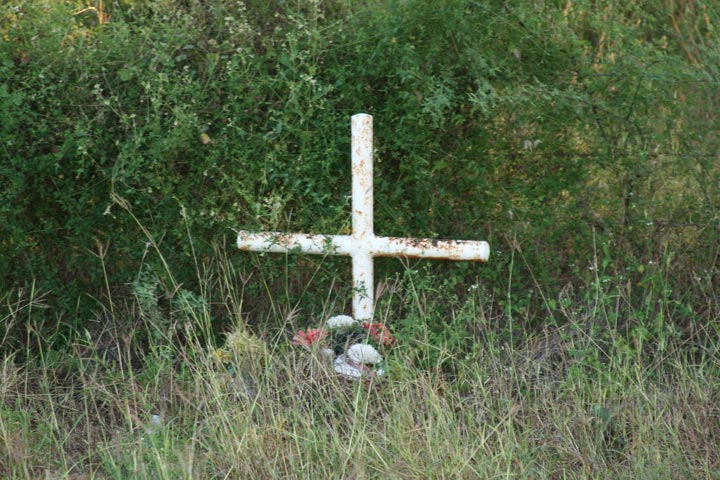
I am terribly saddened by the death of my brother's and sister-in-law's niece, 16. She died last week, several days after a severe car accident that was survived by the three other teens who were in the car. She was a passenger in the rear seat. I don't know all the details of the accident.

There are, of course, reams and reams of statistics on teen driving accidents and scientific research in neurology and sociology that try to explain some of this. Many states have taken actions such as progressive licensing, driver training, seatbelt laws, and more to protect our teenagers essentially from themselves and their friends--and not without some results. Teenage driving deaths have declined over the last fifteen years.

However, thousands of teenagers continue to die in car accidents every year, and teens will always be more likely to have accidents than others no matter what we do, because of their inexperience as drivers and their not-yet-completely-developed judgment. This second point is not a criticism of teenagers; it's a neurological fact. When it becomes personal, though, all of this information is meaningless. My family has lost a loved one, a piece of our lives that cannot be replaced.

Everywhere I read about the teenage driving "epidemic" (if it were a disease killing thousands of teenagers every year, imagine the response of our government), the solutions are always about changing licensing, rules, training, parental responsibility, etc. Never do I read about changing society so that teens (and others) just don't need to drive--or as much.

A significant part of this problem lies in the way we have created our urban and suburban forms. Teenagers want to have fun; they want to be with their friends; they want to take advantage of things going on in and around their schools and communities. In most communities, however, the only way they can do these things is to drive or be driven. This blog is about transformation--primarily to reduce our environmental impacts. But transforming the way we develop our communities will provide so many additional benefits, too.

If our teens could easily walk or take the bus or rail to where they want to go. If they could safely bike to their friends' houses and to the local shops and theaters. If the fun stuff they want to do was accessible to them. I believe not only would that improve the quality of their lives--and their parents' lives, but it might save hundreds of their lives, too. Somehow we have to change the culture, too. Driving is cool to many teens; I can't change that in the short term. In the long run, though, perhaps we can.

The way we design and develop our cities and our transportation systems has to change. We are not on a sustainable path: not environmentally sustainable, not culturally sustainable, not economically sustainable. My brother's niece is gone. . .forever. Another 10 teens will die today in auto accidents. As the father of a 15-year old, I'm not in favor of limiting our childrens' opportunities as a solution (one of the criticisms of raising driving ages and graduated licensing). Instead let's re-create our land use forms and our transportation systems in ways that make our lives better AND safer AND less resource intensive all at once.

R. S. vT., may you rest in peace.

Mars and Venus (Earth Loses)

Brac_map I'm often amazed at how really smart people can't seem to put 2&2 together. This last Sunday's Washington Post had a long, in-depth article about the BRAC relocations. It included a great graphic shown here (click on it for a larger view). At the same time, virtually every day brings additional news about the need to take immediate and significant actions to battle global warming. Most of the nations of the world met in Bali recently for the yearly Conference of the Parties that guides the international dialog on climate change. Europe, for one, was pushing for 25-40% reductions in greenhouse gases by 2020 (the U. S. 'succeeded' in watering down much of the language).

If you look at the map you will see that the jobs are primarily moving away from places where transportation options are more plentiful to places where they are not. There is no question that the number of miles driven in the DC area will go up with this realignment. The article points out the need for hundreds of millions of dollars of additional transportation infrastructure just to accommodate the additional traffic. All of it is more roads. Does the BRAC commission read the news about global warming? Are they living on another planet?

What you might hear from them is, "Our job was to blah...blah...blah. Once we met those objectives, then global warming might be a secondary issue, but it wasn't our job." I once attended a presentation in which the presenter posed the question, "Who is in charge of climate change?" The answer is, well, no one really. Which means that we all are. Including the BRAC.

It's probably too late to change the relocations, but it's not too late to make opportunities out of them. Knowing that all these jobs are moving, what changes can be made that will reduce the traffic and greenhouse gases at the same time? The most obvious is to look at which jobs can be done without needing the people to actually be there. Having workers telecommute 2-3 days per week (or full time) would reduce driving and congestion tremendously and also reduce terrorism risk by spreading out the workforce. Comprehensive additional planning should take place immediately, including starting work on extending rail (VRE and Metrorail to the Proving Ground and Fort Belvoir and MARC direct to Fort Meade). Other land use planning needs to be much smarter, both on the bases themselves and in areas that will attract workers. The forts themselves should make themselves examples of places that people can get around without needing a personal car. That way those who come by the train or bus or carpool can get where they want and need to be. One way might be to put in PRT (personal rapid transit), which I'll cover another day.

In any case, it would be great to see the Defense Department take the lead on being forward thinking and progressive on how to achieve their realignment goals without exacerbating global warming.

Intersection of Transportation and Demographics

OldpeoplecrossingThe issue of the elderly and transportation has been a topic of news articles around the country lately (USA Today 12/2, W. Post 12/7, Appleton Post-Crescent 12/9, San Diego Union Tribune 12/8). Most of these focus on providing volunteer or low-cost rides to old or infirm people to help them get where they need to go.

My sense is that transportation planners do not typically take future demographics into consideration very well. In particular, when planning is made for transportation infrastructure that will be in service for 40-50 years, there will always be statistics on future traffic demands on that infrastructure, usually used to help justify and plan the project. My experience with my own aging relatives is that long before they need to stop driving altogether, they find driving on expressways and freeways at high speeds very uncomfortable. All those 40-somethings who are using the Springfield interchange and Woodrow Wilson Bridge now will be 70-somethings in 30 years. Are we designing the long-term infrastructure in a way that will accommodate the demographics not as they are now, but the demographics as they will be decades in the future? I have never read anything in the planning for transportation projects like these that expressly discusses that issue. If you have, I'd be interested in hearing about it.

Battle in Bethesda (Trail users unite to fend off developer)

Bar4Many of the people who enjoy the trails in this area: bicyclists, runners, bladers, walkers, etc. have really come to appreciate the Capital Crescent Trail that connects Georgetown to Bethesda, passes under Wisconsin Avenue through a terrific old railway tunnel, and then continues as a gravel interim trail all the way to Silver Spring (someday it will loop all the way to Union Station, but that's another story). In fact, sections of the trail see more than 20,000 users per week.Westportal

In July a developer submitted plans to Montgomery County to develop the parcel of land at the corner of Woodmont Avenue and Bethesda Avenue where the trail enters the tunnel. As part of their plan they were proposing to close the tunnel for more than two years.

When I heard about this, my initial reaction was that there was no way Montgomery County would allow that to happen. But then I had a second thought that if people weren't paying attention, then the ball might not bounce the right way. Well, it didn't take long for trail users and other interested parties to take note. Montgomery County Councilman Roger Berliner (in whose district the tunnel is located) held a public meeting on September 15 to discuss the development (the tunnel closing was a key issue, but not the only one, aired at the meeting). I attended this meeting, and it was packed; well over 100 people were there. So was the developer, who had been invited to discuss the project.

Bar3The developer clearly got the message that the community was not going to accept the tunnel closing. Last week, the Coalition for the Capital Crescent Trail reported on its web site that the developer has informed the Montgomery County Planning Board that it will keep the tunnel open during construction. This was clearly a victory for everyone. The trail and tunnel are key commuting routes as well as a wonderful recreational trail for thousands of users. In an area like Bethesda, where traffic is a constant issue, providing as many other choices as possible is an imperative for quality of life.

Bikes and HOT Lanes

BannerpicSunday's Washington Post Outlook section published an op-ed piece by Bruce Wright, chairman of Fairfax Advocates for Better Bicycling that was spot on. His key point being that as Virginia moves forward with $1.7 billion of investment to move cars better (the new HOT Lanes), the state absolutely needs to think comprehensively about other modes--in particular cycling. Currently it is difficult or impossible to cross the beltway on a bicycle along most routes. Although I have heard of people doing it, it's pretty terrifying for me to imagine riding on Route 50 where it crosses I-495. Most of the other crossings are no better. There are undoubtedly thousands of people who live only a few miles from their jobs or from other places they want to go, but the Beltway is in between, forcing them to drive those short distances.

In fact, VDOT's Policy for Integrating Bicycle and Pedestrian Accommodations makes this statement: "The Virginia Department of Transportation (VDOT) will initiate all highway construction projects with the presumption that the projects shall accommodate bicycling and walking." Here's a golden opportunity for VDOT to demonstrate that it is not just paying lip service and--in contrast to its performance as reported in a previous post on a VDOT missed opportunity--really understands the value of bicycling and walking as viable travel choices.

Thanks, Bruce, for getting this key issue into the Post where our policy makers are more likely to see it.

80,000 Tons!!

Congratulations Arlington!

Picture4 Arlington’s design: urban villages, excellent transit, good pedestrian and bicycle facilities, make saving gasoline (and greenhouse gases) easier than most places. Many Arlingtonians are able to get to their jobs, take care of their daily tasks, visit friends and participate in community life without having to drive everywhere. Less driving means less air pollution and less greenhouse gas emissions, helping to reduce our climate change impact.

P22aTransportation statistics bear this out. In the whole Washington region, almos3421745_20eb9c1552_ot 3 out of 4 workers (74%) drive alone to work, while in Arlington it’s a little over 50%. This difference means about 80,000 fewer tons of CO2 are being emitted than if Arlington County were like the regional average—just from these commuting trips. That’s also more than 8 million gallons of gasoline being saved each year!I_walkclipart_1

Also remarkable is that more than 40% of non-work trips by Arlingtonians are made without driving—the majority of these on foot.