Arlington County, VA has been improving its bicycling infrastructure along the Rosslyn-Ballston corridor. With the addition of the buffered bike lanes on Clarendon Blvd. through Clarendon, there is now an almost continuous corridor from Ballston to Courthouse. There is, however, a two-block gap that is difficult for cyclists to navigate that--if improved--could make a significant difference in the ease of use for cyclists along the corridor. It would close the one remaining gap connecting these important activity centers.
With some minor infrastructure changes, this gap could be closed, and the corridor could be completed.
Here's a diagram of suggested improvements for eastbound cyclists at the intersection of Fairfax and 10th St. N.
Showing posts with label transportation. Show all posts
Arlington Public Schools Should Evolve Bus Plan to Comprehensive Transportation Plan
![]() |
| Photo by afagen on flickr |
My point of view, and this blog post, have to do with the overall transportation plan for Arlington Public Schools.
A visit to the web site under the transportation department reveals this statement:
On-street Crescent Trail will be worse for bikes and peds
(This is an unedited cross post from Greater Greater Washington)
This post is in response to a Greater Greater Washington post from Dan Reed: On-street Crescent Trail may be better for bikes and peds
I disagree with almost everything Mr. Reed suggests in his post.
For a year or so I commuted through that tunnel almost every day. It is an excellent amenity.
Mr. Reed suggests that the on-street alternative may be safer because of the likelihood of crime, and he points out crime problems at other bike/ped facilities. This is a red herring argument. The tunnel has been open since 1998 and crime has not been an issue. Undoubtedly it will be even less so with greater usage. The safety benefit of not having to cross Wisconsin Avenue at grade is much greater than any potential danger associated with crime.
This post is in response to a Greater Greater Washington post from Dan Reed: On-street Crescent Trail may be better for bikes and peds
I disagree with almost everything Mr. Reed suggests in his post.
For a year or so I commuted through that tunnel almost every day. It is an excellent amenity.
Mr. Reed suggests that the on-street alternative may be safer because of the likelihood of crime, and he points out crime problems at other bike/ped facilities. This is a red herring argument. The tunnel has been open since 1998 and crime has not been an issue. Undoubtedly it will be even less so with greater usage. The safety benefit of not having to cross Wisconsin Avenue at grade is much greater than any potential danger associated with crime.
Monday What's on the Web: Reconnecting America
Recommecting America is a web site dedicated to promoting, advocating for and improving Transit-Oriented Development.
This is how they describe their mission on their site:
I recommend joining to receive their daily updates, which link through to a tremendous number of articles related to this topic. I learn something new almost every day.
This is how they describe their mission on their site:
Reconnecting America is a national non-profit organization that is working to integrate transportation systems and the communities they serve, with the goal of generating lasting public and private returns, improving economic and environmental efficiency, and giving consumers more housing and mobility choices.Their sister site, the Center for Transit Oriented Development is focused more on that specific topic, but the two are interrelated.
I recommend joining to receive their daily updates, which link through to a tremendous number of articles related to this topic. I learn something new almost every day.
Monday What's on the Web: Compenhagenize
Every Monday I highlight other bloggers or web contributors who are making important or interesting contributions to climate, sustainability, transportation or market transformation. Check back each week for another installment.
----------------------------
That quote is taken from the Copenhagenize.com website, which is thankfully written in English. There's not much to say about the blog. It features stories, snippets, policy thoughts and other aspects related to how Copenhagen is (and how it became) the most bicycle-friendly city in the Western world. Here are a few sample posts:
It's a quick look every day at something cool or interesting about urban bicycling. Take a look.
----------------------------
"Each and every day roughly 500,000 citizens choose the bicycle in Greater Copenhagen. This blog highlights who they are, why they do and how it was made possible.
Forty years ago Copenhagen was just as car-clogged as anywhere else but now 37% of commuters crossing the city boundary ride bicycles each day. That number rises to 55% in the city proper. Copenhagenizing is possible anywhere."
That quote is taken from the Copenhagenize.com website, which is thankfully written in English. There's not much to say about the blog. It features stories, snippets, policy thoughts and other aspects related to how Copenhagen is (and how it became) the most bicycle-friendly city in the Western world. Here are a few sample posts:
It's a quick look every day at something cool or interesting about urban bicycling. Take a look.
How Much Congestion does the Clean Fuel Exemption Cause on I-66 Inside the Beltway?
Hybrids and other clean-fuel cars are exempted from the HOV requirement on I-66. All traffic inside the beltway on I-66 must be HOV-2, be a motorcycle or have a clean fuel exemption license plate. Dr. Gridlock at the Washington Post has argued to remove this exemption to help the HOV lanes function better. It has been my opinion that the problem was caused more by scofflaws--that is, single occupancy drivers illegally on the road--than the hybrid cars.
Today I had a chance to test my presumption. I was crossing over I-66 on the pedestrian overpass near Madison Manor park (map). I tried to notice how many cars were scofflaws but soon realized that it was difficult to tell if there was a child in the back seat or not. Also, many of the cars had the clean-car license plates. Then I realized I could read the license plates easily. Traffic seemed to be traveling about 30-40 miles per hour, slower than free-flowing. So one could argue that there was congestion, since the HOV lanes were not moving at 55 miles per hour. So I started counting.
Plates with CF, CX, CY or CZ are exempt from the HOV requirement. (One can have their vanity plate exempted, too, but there were few of these). I pulled out a piece of paper and a pen. Here's what I observed in six minutes from 8:04 to 8:10 AM.
Here's some quick math extrapolating to an hour and making some assumptions:
Today I had a chance to test my presumption. I was crossing over I-66 on the pedestrian overpass near Madison Manor park (map). I tried to notice how many cars were scofflaws but soon realized that it was difficult to tell if there was a child in the back seat or not. Also, many of the cars had the clean-car license plates. Then I realized I could read the license plates easily. Traffic seemed to be traveling about 30-40 miles per hour, slower than free-flowing. So one could argue that there was congestion, since the HOV lanes were not moving at 55 miles per hour. So I started counting.
Plates with CF, CX, CY or CZ are exempt from the HOV requirement. (One can have their vanity plate exempted, too, but there were few of these). I pulled out a piece of paper and a pen. Here's what I observed in six minutes from 8:04 to 8:10 AM.
- 333 cars: 67 with clean-car license plates; 266 without.
- 1 motorcycle
- 2 buses
- 1 18-wheeler (which are illegal on this highway)
- 1 eastbound 6-car Metro train
Here's some quick math extrapolating to an hour and making some assumptions:
- 2700 HOV cars with 2.2 riders = 6000 people
- 670 clean-fuel cars with 1.1 riders = 750 people
- 20 buses with 40 people = 2000 people
- 10 metro trains with 800 riders = 8000 people
Monday What's on the Web: Extraordinary Observations
Every Monday I highlight other bloggers or web contributors who are making important or interesting contributions to climate, sustainability, transportation or market transformation. Check back each week for another installment.
----------------------------
Extraordinary Observations is a blog maintained by one of my fellow DC area bloggers named Rob Pitingolo. He moved to Arlington, Virginia from Cleveland in mid-2010 after graduating from John Carroll University with a degree in Economics. He writes about issues of urbanism, economics, transportation and politics at his blog. He also occasionally contributes to Greater Greater Washington.
I like his posts because they tend to be short and pithy and make an interesting ("extraordinary" might be a stretch, but--hey--a little hyperbole never hurt anyone) observation. It's like a little piece of think candy in your day. Some recent posts include:
Check it out. You're sure to find a post or two you like.
----------------------------
Extraordinary Observations is a blog maintained by one of my fellow DC area bloggers named Rob Pitingolo. He moved to Arlington, Virginia from Cleveland in mid-2010 after graduating from John Carroll University with a degree in Economics. He writes about issues of urbanism, economics, transportation and politics at his blog. He also occasionally contributes to Greater Greater Washington.
I like his posts because they tend to be short and pithy and make an interesting ("extraordinary" might be a stretch, but--hey--a little hyperbole never hurt anyone) observation. It's like a little piece of think candy in your day. Some recent posts include:
Check it out. You're sure to find a post or two you like.
Monday What's on the Web: NRDC's Switchboard
Each Monday I highlight other bloggers or web contributors who are making important or interesting contributions to climate, sustainability, transportation or market transformation. Check back each week for another installment.
----------------------------
----------------------------
The National Resources Defense Council (NRDC)'s Switchboard is their umbrella page for all their staff bloggers, of which there are many. The quantity of material here is large, averaging more than ten blog posts per day. The range of topics is also broad, including:
- Environmental Justice
- Green Enterprise
- Solving Global Warming
- The Media and the Environment
- Transportation
and many, many more. Coverage of topical issues, like the COP16 meetings in Cancun is strong and complete. Whatever your issue of interest, you are certain to find one or more bloggers at NRDC who write interesting and insightful posts on it. Enjoy!
Labels:
climate change,
NRDC,
transportation,
What's on the Web
Monday What's on the Web: The Urbanophile
Every Monday I highlight other bloggers or web contributors who are making important or interesting contributions to climate, sustainability, transportation or market transformation. Check back each week for another installment.
----------------------------The Urbanophile is an award-winning blog that focuses on cities--understanding how they work and providing ideas and thought leadership on ways to improve them for the 21st century. It is written by Aaron M. Renn, who's short bio reads: "Aaron M. Renn is an opinion-leading urban analyst, consultant, speaker, and writer on a mission to help America’s cities thrive and find sustainable success in the 21st century." (Full bio here.)
He lives in the Chicago area and likes to focus on what he calls America's "everyday" cities--often in the Midwest. His ideas would be considered progressive urbanist, and they jive well with the focus of this blog--transformation to a more sustainable world.
Some recent posts include (warning: some of his posts can be very long and detailed):
Commuting Market Share is the Wrong Way to Judge Transit
From a guest blogger, Randy Simes: Cincinnati's Dramatic, Multi-Billion Dollar Riverfront Revitalization Nearly Complete
Buffalo, You are Not Alone
You may follow the Urbanophile on Twitter also.
----------------------------The Urbanophile is an award-winning blog that focuses on cities--understanding how they work and providing ideas and thought leadership on ways to improve them for the 21st century. It is written by Aaron M. Renn, who's short bio reads: "Aaron M. Renn is an opinion-leading urban analyst, consultant, speaker, and writer on a mission to help America’s cities thrive and find sustainable success in the 21st century." (Full bio here.)
He lives in the Chicago area and likes to focus on what he calls America's "everyday" cities--often in the Midwest. His ideas would be considered progressive urbanist, and they jive well with the focus of this blog--transformation to a more sustainable world.
Some recent posts include (warning: some of his posts can be very long and detailed):
Commuting Market Share is the Wrong Way to Judge Transit
From a guest blogger, Randy Simes: Cincinnati's Dramatic, Multi-Billion Dollar Riverfront Revitalization Nearly Complete
Buffalo, You are Not Alone
You may follow the Urbanophile on Twitter also.
High Speed Rail in Spain
Sorry for the lag in postings the last couple of weeks. I was away on vacation in Spain.
I had the distinct pleasure of taking three trips on the AVE high-speed rail network. The first leg I took was the express non-stop Madrid to Barcelona. It makes the 386 mile trip in 2 hours and 38 minutes at an average speed of almost 150 miles per hour.
Spain (and Europe in general--not to mention China) continues to invest heavily in expanding its high-speed rail network, while the US cannot seem to get a single effective line built in this decade. It's a sad indicator, in my opinion, of the decline of US leadership in the world.
I had the distinct pleasure of taking three trips on the AVE high-speed rail network. The first leg I took was the express non-stop Madrid to Barcelona. It makes the 386 mile trip in 2 hours and 38 minutes at an average speed of almost 150 miles per hour.
Spain (and Europe in general--not to mention China) continues to invest heavily in expanding its high-speed rail network, while the US cannot seem to get a single effective line built in this decade. It's a sad indicator, in my opinion, of the decline of US leadership in the world.
Labels:
rail,
Spain,
transportation
Monday What's on the Web: The Bike-Sharing Blog
Every Monday I highlight other bloggers or web contributors who are making important or interesting contributions to climate, sustainability, transportation or market transformation. Check back each week for another installment.
----------------------------
Following on the heels of carsharing, now dominated in the US by ZipCar, bike sharing programs are springing up all over. As we transform our cities to be less car dependent, providing as many other options as possible becomes a key strategy for making those cities function well and providing for higher quality of life. Bike sharing is a strategy that fits within that transformation paradigm.
The Bike-Sharing Blog is the best resource for keeping up to date on bike sharing around the world. Paul DeMaio, Founder of MetroBike LLC--a bike-sharing consultancy, runs the blog. His daily work keeps him engaged on the front lines of bike sharing, and we are fortunate to have him share the latest and greatest with us.
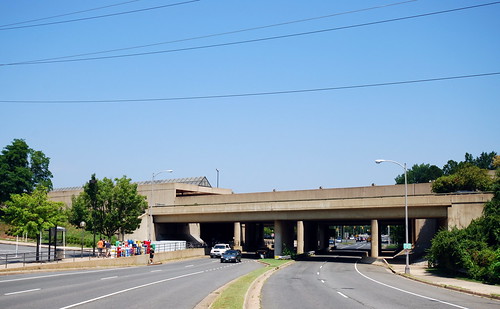
Recent posts include:
Melbourne on top of Bike Sharing Down Under
Bike Sharing Cost-Benefit Analysis
North America's Newest and Largest Year-Round Service Opens in Mexico City
----------------------------
Following on the heels of carsharing, now dominated in the US by ZipCar, bike sharing programs are springing up all over. As we transform our cities to be less car dependent, providing as many other options as possible becomes a key strategy for making those cities function well and providing for higher quality of life. Bike sharing is a strategy that fits within that transformation paradigm.
The Bike-Sharing Blog is the best resource for keeping up to date on bike sharing around the world. Paul DeMaio, Founder of MetroBike LLC--a bike-sharing consultancy, runs the blog. His daily work keeps him engaged on the front lines of bike sharing, and we are fortunate to have him share the latest and greatest with us.Recent posts include:
Melbourne on top of Bike Sharing Down Under
Bike Sharing Cost-Benefit Analysis
North America's Newest and Largest Year-Round Service Opens in Mexico City
Metro Responds to Shuttle Bus Suggestion
Metro
responded to my suggestion for Orange Line shuttle buses I posted over at Greater Greater Washington. During Memorial Day weekend and the following two weekends, Metro is suspending Orange Line service between East Falls Church and West Falls Church and replacing them with shuttles. My original post suggested a different set of shuttles than just one between those two stations.
I had forwarded it to Mr. Sarles as a commenter on GGW, John Bennett, suggested. Here is the reply:
Dear Mr. Offutt:
I was pleased that I received a thoughtful response. Kudos to them.
I suspect that their cost analysis did not include the cost savings from not running the trains. I find it hard to believe those savings would not be fairly large. Whatever shuttle system they operate will need to transport the same number of passengers (all of them), so the alternate system would only need to be marginally larger to make for better customer service, not outrageously larger.
(This post also cross posted on Greater Greater Washington)
Photo of EFC station by MV Jantzen
responded to my suggestion for Orange Line shuttle buses I posted over at Greater Greater Washington. During Memorial Day weekend and the following two weekends, Metro is suspending Orange Line service between East Falls Church and West Falls Church and replacing them with shuttles. My original post suggested a different set of shuttles than just one between those two stations.I had forwarded it to Mr. Sarles as a commenter on GGW, John Bennett, suggested. Here is the reply:
Dear Mr. Offutt:
Thank you for your May 25, 2010 email message to Richard Sarles, General Manager of the Washington Metropolitan Area Transit Authority (Metro), with suggestions regarding Orange Line shuttle service during our upcoming closures between East Falls Church and West Falls Church Metrorail stations. Mr. Sarles always welcomes input from our riding public and asked that I respond to your suggestions.
When planning for service disruptions, we keep several priorities in mind: customer convenience, service reliability, funding availability and clear communications.
For the upcoming weekends, we looked at a variety of shuttle options including the one you have suggested. We decided on one free shuttle between East Falls Church and West Falls Church stations because:
For these reasons, we have opted to operate one shuttle. However, we will evaluate the shuttle operation after this weekend and make any adjustments necessary to minimize customer inconvenience, maximize our funds, preserve service reliability and maintain clear communications for subsequent work. I will ensure your input is considered in the evaluation process.
- One shuttle would cost less to operate than running multiple shuttles with multiple station destinations. It was the most cost-effective option and we are committed to using our resources wisely.
- Travel time for multiple shuttles would be heavily impacted by traffic on I-66, which is subject to numerous delays (predictable and unpredictable) especially during the holiday weekend. Without delays on I-66, travel time would most likely be equal.
- Communicating the operation of one shuttle is less confusing to the customer. The one-shuttle method most resembles a 'normal' commute on the Orange Line. If you have multiple shuttles, there are more opportunities for people to board incorrect buses, thus creating more frustration and inconvenience for our riders.
I hope you find this information helpful. Again, thank you for your suggestions.
Sincerely,
James J. Hughes
Managing Director
Office of Intermodal Planning
I was pleased that I received a thoughtful response. Kudos to them.
I suspect that their cost analysis did not include the cost savings from not running the trains. I find it hard to believe those savings would not be fairly large. Whatever shuttle system they operate will need to transport the same number of passengers (all of them), so the alternate system would only need to be marginally larger to make for better customer service, not outrageously larger.
(This post also cross posted on Greater Greater Washington)
Photo of EFC station by MV Jantzen
Labels:
arlington,
bus,
greater greater washington,
Metro,
transportation,
wmata
Rush Hour the Way It Should Be!
If we could make the transformation the way they have in the Netherlands, perhaps our rush hour would look more like this:
Labels:
bicycling,
transit,
transportation
Monday What's on the Web: The Transport Politic
Every Monday I highlight other bloggers or web contributors who are making important or interesting contributions to climate, sustainability, transportation or market transformation. Check back each week for another installment.
----------------------------
The Transport Politic is written by the prolific Yonah Freemark, an independent researcher currently living in France. Where he lives seems to be irrelevant, however, since he covers transportation issues all over the world, including significant coverage in the United States.
The blog focuses pretty strongly on public transit, rail systems, policy and politics of transportation. Yonah does extensive research, and the posts are very thorough and often include impressive technical detail. He clearly promotes the viewpoint that our transportation systems need to move away from road-based policies to something more sustainable.
Examples of recent posts include:
Merging Transportation and Land Use Planning at the Federal Level
Sydney Looks at Closing Downtown Streets to Traffic, Considers Light Rail ExpansionU.S. FTA Head Rogoff Paints Grim Picture of Nation's Transit Priorities
China Expands Its Investment in Rapid Transit, Paving Way for Future Urban Growth
----------------------------
The Transport Politic is written by the prolific Yonah Freemark, an independent researcher currently living in France. Where he lives seems to be irrelevant, however, since he covers transportation issues all over the world, including significant coverage in the United States.The blog focuses pretty strongly on public transit, rail systems, policy and politics of transportation. Yonah does extensive research, and the posts are very thorough and often include impressive technical detail. He clearly promotes the viewpoint that our transportation systems need to move away from road-based policies to something more sustainable.
Examples of recent posts include:
Merging Transportation and Land Use Planning at the Federal Level
Sydney Looks at Closing Downtown Streets to Traffic, Considers Light Rail ExpansionU.S. FTA Head Rogoff Paints Grim Picture of Nation's Transit Priorities
China Expands Its Investment in Rapid Transit, Paving Way for Future Urban GrowthHow Viable is Commuter Rail for North Carolina's Triangle?
Freight Rail Is a Transformative Solution, But Not Necessarily a Job Creator
Today's
Washington Post contained an op-ed penned by the Governors of five states in the Mid-Atlantic and the South. In it, they recommend investing in a 2,500 mile rail corridor termed the Crescent Corridor that will replace much of the truck traffic between the South and the Northeast. This is a great idea, and it has already received some stimulus funding. As pointed out in the article, as much as 40% of the traffic on I-81 is truck traffic. There is not much room to expand road capacity, and even if there were, the space required to move the same amount of freight via rail will be much, much smaller.
In addition, shipping freight by rail is far more environmentally sustainable, with reductions in fuel consumption of 2/3rds or more to transport the same amount of goods. "It's an idea that will not only create jobs but also reduce highway congestion, improve safety and take more than 1 million long-haul trucks off the road each year," the article states.
Transforming our transportation systems is an imperative objective as we continue to move into a world of rapidly changing climate, unsustainable land-use patterns and increasing traffic congestion. Shifting significant portions of our freight transportation from truck to rail is a no brainer, even taking into account the significant infrastructure costs involved.
So I am totally on board with these governors and the overall idea of shifting freight to rail. My only quibble is that they are throwing out the job creation rubric as a key reason for doing this. You can see the contradiction in their statement above: removing 1 million trucks from the road will also remove the truck drivers and the support systems for those trucks. That's part of the reason it's so efficient--you only need one really big vehicle with a staff of two or three people to move the goods that would have taken hundreds. Yes, some jobs will be created in the construction part of the initiative, but in the long run, shifting to rail will be much less labor intensive than trucking.
So, yes, let's invest in rail (passenger rail, too, for that matter) Let's transform our transportation systems to more sustainable models. But let's not couch it in false terms of job creation.
Washington Post contained an op-ed penned by the Governors of five states in the Mid-Atlantic and the South. In it, they recommend investing in a 2,500 mile rail corridor termed the Crescent Corridor that will replace much of the truck traffic between the South and the Northeast. This is a great idea, and it has already received some stimulus funding. As pointed out in the article, as much as 40% of the traffic on I-81 is truck traffic. There is not much room to expand road capacity, and even if there were, the space required to move the same amount of freight via rail will be much, much smaller.In addition, shipping freight by rail is far more environmentally sustainable, with reductions in fuel consumption of 2/3rds or more to transport the same amount of goods. "It's an idea that will not only create jobs but also reduce highway congestion, improve safety and take more than 1 million long-haul trucks off the road each year," the article states.
Transforming our transportation systems is an imperative objective as we continue to move into a world of rapidly changing climate, unsustainable land-use patterns and increasing traffic congestion. Shifting significant portions of our freight transportation from truck to rail is a no brainer, even taking into account the significant infrastructure costs involved.
So I am totally on board with these governors and the overall idea of shifting freight to rail. My only quibble is that they are throwing out the job creation rubric as a key reason for doing this. You can see the contradiction in their statement above: removing 1 million trucks from the road will also remove the truck drivers and the support systems for those trucks. That's part of the reason it's so efficient--you only need one really big vehicle with a staff of two or three people to move the goods that would have taken hundreds. Yes, some jobs will be created in the construction part of the initiative, but in the long run, shifting to rail will be much less labor intensive than trucking.
So, yes, let's invest in rail (passenger rail, too, for that matter) Let's transform our transportation systems to more sustainable models. But let's not couch it in false terms of job creation.
Labels:
alabama,
mississippi,
new jersey,
pennsylvania,
rail,
tennessee,
transportation,
virginia,
washington post
The Last Mile in Tysons Corner
My
recent post regarding solutions to the "last mile" problem in Tysons has been cross-posted to Greater Greater Washington and has been picking up some good comments. Take a look. It will be followed by additional posts with some different viewpoints.
Labels:
Metro,
transportation,
tysons
"A Bicycle is not A Transportation Device" (NOT!)
There's
been a bit of a brouhaha over a statement made by a Fairfax County official, Supervisor John Cook, who wants to cut out funding for bicycle facilities in their county (article here). He said, "I don't believe a bicycle is a transportation device. I think it's a recreation device. The big problem is people don't want to ride their bike in the rain or get sweaty before work."
Of course he is dead wrong, but this attitude works against efforts to transform our communities and transportation systems to something more sustainable. (It's also a bit presumptive that the only transportation use he can think of is getting to and from work.)
I sent the Commissioner this letter.
Hello Mr. Cook,
I read in the Examiner your quote that you believe bicycles are not transportation. I can assure you that is not the case. As a long-time bike commuter (yes, I sweat and ride in the rain--as do hundreds of others) I have met and seen literally thousands of people who use their bikes to get where they need to go.
I live in Arlington County, but for about a year I worked for a company in Herndon and then Reston. I biked there at least 90% of the time. Every single day: summer, winter, fall, spring, I would see other cyclists riding both ways on their way to work or otherwise. I don't work there any more, but not long ago I biked to to the Fair Oaks Mall to see a doctor at the Kaiser facility there. I generally bike to my dentist in Tysons, and, recently, pulled my daughter on her trailer bike to her dentist appointment there, too. We also often bike to her orthodontist in Seven Corners and her dance studio in Bailey's Crossroads. If that's not transportation, what is?
I would strongly suggest you go out to the W&OD some weekday morning in May or June (yes, it's true, fewer cyclists ride in the winter) and watch. Even better, why don't you participate in
Bike to Work Day on May 15. Perhaps you saw the press release from the County. Six of the 23 pit stops this year will be in Fairfax County. I'm sure FABB or WABA would be pleased to provide you with a bike buddy to help you get there.
Portland just passed a resolution to spend over $600 million on bike facilities over the next 20 years. I suspect you perceive Portland as a bastion of liberal, spandex-wearing weirdos, but what do you know that they don't? (or what do they know that you don't?)
Clearly you were just speaking from your own limited viewpoint. I believe it's always a good idea to gather facts and data first before making an assertion based just on one's own personal experience. Had you done that, you would have learned that bicycling is rapidly growing in the region, the number of bike commuters is rising every year, and that even in Fairfax County there are thousands of residents who use their bikes both for transportation and recreation.
Good luck to you, and I hope that you are able to make it out to Bike to Work Day this year. Sign up early, and you can get a free t-shirt.
Kind regards,
Steve Offutt
(top photo by M.V. Jantzen; Reston BTW Day photo from FABB)
been a bit of a brouhaha over a statement made by a Fairfax County official, Supervisor John Cook, who wants to cut out funding for bicycle facilities in their county (article here). He said, "I don't believe a bicycle is a transportation device. I think it's a recreation device. The big problem is people don't want to ride their bike in the rain or get sweaty before work."Of course he is dead wrong, but this attitude works against efforts to transform our communities and transportation systems to something more sustainable. (It's also a bit presumptive that the only transportation use he can think of is getting to and from work.)
I sent the Commissioner this letter.
Hello Mr. Cook,
I read in the Examiner your quote that you believe bicycles are not transportation. I can assure you that is not the case. As a long-time bike commuter (yes, I sweat and ride in the rain--as do hundreds of others) I have met and seen literally thousands of people who use their bikes to get where they need to go.
I live in Arlington County, but for about a year I worked for a company in Herndon and then Reston. I biked there at least 90% of the time. Every single day: summer, winter, fall, spring, I would see other cyclists riding both ways on their way to work or otherwise. I don't work there any more, but not long ago I biked to to the Fair Oaks Mall to see a doctor at the Kaiser facility there. I generally bike to my dentist in Tysons, and, recently, pulled my daughter on her trailer bike to her dentist appointment there, too. We also often bike to her orthodontist in Seven Corners and her dance studio in Bailey's Crossroads. If that's not transportation, what is?
I would strongly suggest you go out to the W&OD some weekday morning in May or June (yes, it's true, fewer cyclists ride in the winter) and watch. Even better, why don't you participate in
Bike to Work Day on May 15. Perhaps you saw the press release from the County. Six of the 23 pit stops this year will be in Fairfax County. I'm sure FABB or WABA would be pleased to provide you with a bike buddy to help you get there. Portland just passed a resolution to spend over $600 million on bike facilities over the next 20 years. I suspect you perceive Portland as a bastion of liberal, spandex-wearing weirdos, but what do you know that they don't? (or what do they know that you don't?)
Clearly you were just speaking from your own limited viewpoint. I believe it's always a good idea to gather facts and data first before making an assertion based just on one's own personal experience. Had you done that, you would have learned that bicycling is rapidly growing in the region, the number of bike commuters is rising every year, and that even in Fairfax County there are thousands of residents who use their bikes both for transportation and recreation.
Good luck to you, and I hope that you are able to make it out to Bike to Work Day this year. Sign up early, and you can get a free t-shirt.
Kind regards,
Steve Offutt
(top photo by M.V. Jantzen; Reston BTW Day photo from FABB)
Labels:
arlington,
bicycle trail,
bicycling,
fairfax county,
reston,
transportation,
waba
Garnering Support for Traffic Enforcement Cameras
Last year, the Washington Post published an article about speeding and red-light cameras (Shudder speed, Nov. 5). The article cited many cases of citizens hating the cameras, voting against them, vandalizing them and otherwise being significantly opposed. Personally,
I'm fine with the cameras, since I do not speed or run red lights, which is, of course, the ultimate weapon to use against them.
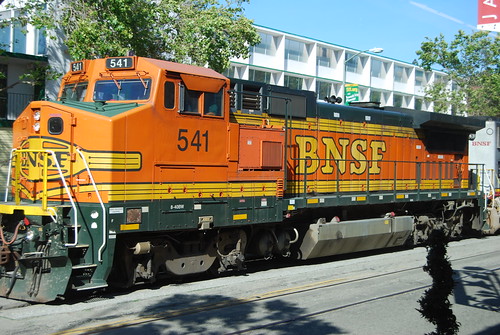
However, I do find myself in partial agreement with those who argue that the cameras are used to raise government revenues. At the end of the day, if everyone obeyed the rules, the cameras would collect no revenue, which is good and a laudable goal. However, until that day, the cameras are collecting fines. I believe that money could be strategically used to garner support for the use of the cameras themselves.
The article stated that DC collected about $36 million in revenue for fiscal year '08 from camera fines. If half of that is actually needed to operate the cameras and administer the fines, etc., that leaves $18 million in other revenues. I actually have no idea of these numbers: I am making them up. I would think that once the system is established, that the administrative costs would be much lower than this, but I don't know.
I suggest we take a lesson from the state of Alaska. Citizens receive a payment from the Alaska permanent fund, which is funded from minerals royalties. DC could do likewise, refunding each citizen their share of the camera excess revenues fund. Using my example above, each citizen would get a check for about $30. That's not an enormous amount, but it helps resolve two issues:
- Arguments about the cameras being primarily as revenue generators would become moot, since the city would not keep any revenues beyond the costs of administering the program.
- Support, particularly among law abiders and non-car owners would strengthen. I know that if my household was going to get a check every year from fining criminal drivers, I would be very supportive.
(cross-posted on Greater Greater Washington)
I'm fine with the cameras, since I do not speed or run red lights, which is, of course, the ultimate weapon to use against them.However, I do find myself in partial agreement with those who argue that the cameras are used to raise government revenues. At the end of the day, if everyone obeyed the rules, the cameras would collect no revenue, which is good and a laudable goal. However, until that day, the cameras are collecting fines. I believe that money could be strategically used to garner support for the use of the cameras themselves.
The article stated that DC collected about $36 million in revenue for fiscal year '08 from camera fines. If half of that is actually needed to operate the cameras and administer the fines, etc., that leaves $18 million in other revenues. I actually have no idea of these numbers: I am making them up. I would think that once the system is established, that the administrative costs would be much lower than this, but I don't know.
I suggest we take a lesson from the state of Alaska. Citizens receive a payment from the Alaska permanent fund, which is funded from minerals royalties. DC could do likewise, refunding each citizen their share of the camera excess revenues fund. Using my example above, each citizen would get a check for about $30. That's not an enormous amount, but it helps resolve two issues:
- Arguments about the cameras being primarily as revenue generators would become moot, since the city would not keep any revenues beyond the costs of administering the program.
- Support, particularly among law abiders and non-car owners would strengthen. I know that if my household was going to get a check every year from fining criminal drivers, I would be very supportive.
(cross-posted on Greater Greater Washington)
Labels:
cameras,
enforcement,
traffic,
transportation,
washington dc
Warren Buffett and His Train Play: Good or Bad for Climate?
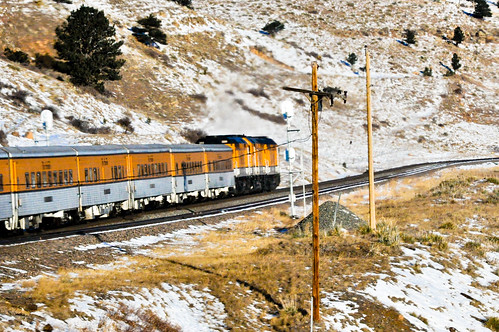
Back
in November, Warren Buffett invested $26 or $34 or $44 billion to buy the Burlington Northern Santa Fe railroad (BNSF) (I saw several different values and didn't waste a lot of time trying to figure out which one was right). Last week Rolling Stone Magazine lampooned him for being a "Climate Killer." About a quarter to a half (again, conflicting figures) of BNSF's business is hauling coal, the antichrist of the climate change battle--300 million tons of it.
Elena Schor at World Changing blog presents both sides.
Green Energy Reporter reports on a couple of angles.
So what do you think? Is Warren a "Climate Killer" by buying BNSF or is he supporting a lower carbon future by investing in greener transportation?
I welcome your comments.
(photo attribution:http://www.flickr.com/photos/pfsullivan_1056/ / CC BY-ND 2.0)
in November, Warren Buffett invested $26 or $34 or $44 billion to buy the Burlington Northern Santa Fe railroad (BNSF) (I saw several different values and didn't waste a lot of time trying to figure out which one was right). Last week Rolling Stone Magazine lampooned him for being a "Climate Killer." About a quarter to a half (again, conflicting figures) of BNSF's business is hauling coal, the antichrist of the climate change battle--300 million tons of it.Elena Schor at World Changing blog presents both sides.
Green Energy Reporter reports on a couple of angles.
So what do you think? Is Warren a "Climate Killer" by buying BNSF or is he supporting a lower carbon future by investing in greener transportation?
I welcome your comments.
(photo attribution:http://www.flickr.com/photos/pfsullivan_1056/ / CC BY-ND 2.0)
Labels:
BNSF,
Buffett,
coal,
transportation
The Saga of the Ski Train
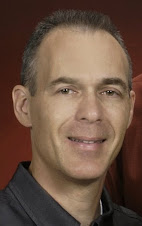
I
just recently learned that the Denver to Winter Park Ski Train, that has operated since 1940, was sold last spring and it's long run as a fixture in Colorado came to an end.
But maybe not. Recent news articles (and discussion) indicate that service may be reimplemented with a new owner and partnership with Amtrak this winter.
Although I lived and skied in Colorado, I never took the ski train, although I know people who did.
According to the owner, the ski train never made money and its costs were escalating, making it even more unprofitable. It cost too much to run the train. Clearly, there is something wrong with this. It can't possibly cost more to carry several hundred people from Denver to Winter Park on a single--albeit large--vehicle than it would cost to have them all pile into individual cars and drive themselves in groups of twos and threes. And so it is true.
The problem is that the train is expected to support itself and its infrastructure while I-70 is paid for by everyone through their taxes. There isn't even a toll; it's a free road. Other costs of driving are lost as externalities--most glaringly the traffic delays that have become legion on weekends. When I was growing up, we could drive from Colorado Springs to Winter Park in about 2 1/2 hours.
Now it takes that long from Denver, which is 50 miles closer.
Some have suggested adding a 3rd lane in each direction on I-70, which would cost more than $4 billion. Others have countered that it would be possible to implement high speed rail to alleviate the traffic for less than that. If I were betting, I'd probably bet on the highway, even though there are almost certainly several other solutions that would cost less. That's because until we can change the institutional and societal expectations that roads are "free" and other transportation is "subsidized," we'll keep building the roads, even if they are the least efficient solution.
So let's bring the ski train back, and let's subsidize it just enough to fill it to capacity every trip. And then let's add a second train 45 minutes later and fill it up, too. And then another. And we can have the drivers, whose trips are now made faster and easier, because there are several hundred fewer cars, help pay for the trains. That seems fair to me: we reduce traffic, pollution and stress for all, and everyone shares the costs and benefits.
================
(train photo by Zach Graves; I-70 traffic photo by Sarah McGee)
just recently learned that the Denver to Winter Park Ski Train, that has operated since 1940, was sold last spring and it's long run as a fixture in Colorado came to an end.But maybe not. Recent news articles (and discussion) indicate that service may be reimplemented with a new owner and partnership with Amtrak this winter.
Although I lived and skied in Colorado, I never took the ski train, although I know people who did.
According to the owner, the ski train never made money and its costs were escalating, making it even more unprofitable. It cost too much to run the train. Clearly, there is something wrong with this. It can't possibly cost more to carry several hundred people from Denver to Winter Park on a single--albeit large--vehicle than it would cost to have them all pile into individual cars and drive themselves in groups of twos and threes. And so it is true.
The problem is that the train is expected to support itself and its infrastructure while I-70 is paid for by everyone through their taxes. There isn't even a toll; it's a free road. Other costs of driving are lost as externalities--most glaringly the traffic delays that have become legion on weekends. When I was growing up, we could drive from Colorado Springs to Winter Park in about 2 1/2 hours.
Now it takes that long from Denver, which is 50 miles closer.Some have suggested adding a 3rd lane in each direction on I-70, which would cost more than $4 billion. Others have countered that it would be possible to implement high speed rail to alleviate the traffic for less than that. If I were betting, I'd probably bet on the highway, even though there are almost certainly several other solutions that would cost less. That's because until we can change the institutional and societal expectations that roads are "free" and other transportation is "subsidized," we'll keep building the roads, even if they are the least efficient solution.
So let's bring the ski train back, and let's subsidize it just enough to fill it to capacity every trip. And then let's add a second train 45 minutes later and fill it up, too. And then another. And we can have the drivers, whose trips are now made faster and easier, because there are several hundred fewer cars, help pay for the trains. That seems fair to me: we reduce traffic, pollution and stress for all, and everyone shares the costs and benefits.
================
(train photo by Zach Graves; I-70 traffic photo by Sarah McGee)
Labels:
colorado,
denver,
ski train,
transportation
Subscribe to:
Posts (Atom)