Going Car Free

Carol_m._browner ChuA couple of Obama's key appointees do not own cars as reported in this article in the Washington Post, which was also picked up by some blogs, including DemConWatch and Kicking Tires. Carol Browner, President Obama's Energy and Environment Czarina and Steven Chu, Secretary of Energy, were reported to not own cars at all. That's two out of the six high level appointees this article reported on. Also, one of the ten aides on the Presidential Task Force on the Auto Industry also reported not owning a car. That's three out of sixteen. Clearly these individuals are making a conscious choice not to own a car, since I presume they could afford one if they wanted. As we transform our transportation systems and our economy to more sustainable models, we need to move away from the concept of one car/one person. The average car sits idle 22 hours or more a day, which is an extremely inefficient use of capital. Creating a more integrated system that allows people to not have to own their cars and tie up many thousands of dollars of capital will serve us better in the long run--both economically and environmentally.

Carfreediet_2Here in Arlington, VA, we have a promotional effort called Arlington's Car-Free Diet. The article did not go into the reasons why these leaders choose not to own a car, but one might guess that they just find it more convenient and cost effective to not have one, and are able to avail themselves of the options available in the DC area, the kind of options that make the Car-Free Diet a model for other places.

We Need a New Model for Expanding Transit

There's been a lot of cheering and excitement about the fact that transit travel is growing while automobile travel is falling. These are good trends, no doubt. I looked at some statistics at the Bureau of Transportation Statistics. This is what I noted:
For 2006, passenger miles on transit were about 52,000,000,000 miles
For 2006, passenger car travel was about 2,650,000,000,000 miles--50 times greater.

So let's say transit represents approximately 2% of all travel. I believe it's actually less than this, but we'll use 2% for argument's sake.

Global climate change requires us to make drastic and enormous changes in our emissions from all sources, including transportation. I live in Washington DC where our Metrorail and Metrobus systems are often running at or above capacity (we do better than 2%, but it's still a single digit percentage of all trips in the region), and this year they are talking about service cuts. Cuts due to budget pressures that will not relieve any congestion in the system--and certainly not help provide better service so we can reduce greenhouse gas emissions.

So what if we need to increase that percentage from less than 2% to something like 20% or 50%! in order to deal with climate change. After all, we can't just keep driving cars 2.6 trillion miles per year. Reducing that 2.6 trillion just a little to 2 trillion by shifting to transit would require a 12-fold increase in transit capacity! What does that mean for your transit system? What would it require to make a 10- or-20-fold increase in capacity. When we talk about increasing transit, our goals are tiny, modest fractions of this kind of increase.

Well, I'm sorry; we're doomed. It will be at least 16 years between the first real plans to build the Silver Line out to Dulles airport and its completion (longer, if you also count the time it was being thought about, proposed and debated). The FTA issued a decision on a short, 5-mile extension of BART in 2006 that will open 8 years later in 2014. I've been hearing a drumbeat for Bus Rapid Transit as a great solution to many transit issues, yet there are few examples of successful systems, and almost every proposed system is small in scope, running behind schedule or bogged down in the idea stage.

How can we possibly increase the capacity of our public transport systems by an order of magnitude if takes decades to complete a single project?

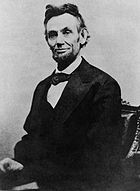
Well, I can't see how our current public agency model for creating and operating and expanding transit will be up to the task. Lincoln said it best:
"The dogmas of the quiet past, are inadequate to the stormy present. The occasion is piled high with difficulty, and we must rise -- with the occasion. As our case is new, so we must think anew, and act anew."
The occasion is global climate change, and we must think and act anew. Somehow we need to change the model for transportation such that the private sector benefits from providing transportation with close to zero emissions. Private streetcar companies built thousands and thousands of miles of lines in just a couple of decades around a hundred years ago. Some streetcar barons made millions of dollars in the process. Was that good or bad? Well, no one in our transit agencies is incentivized by millions of dollars in potential profits and are not consumed by entrepreneurial zeal.

I don't know what the right answer is, but I know the wrong answer is just to keep doing what we're doing now--just a little better or a little faster or a little different. Somehow we have to think and act anew.

16? 2? 53A? &%@**#!!

NumbersIMPORTANT NOTE: In this post I may use ART and Metro as examples. That's because--being in the DC area--I know more about them. The points I am making are intended to apply to mass transit in general and are not intended as criticisms of these particular systems any more than transit systems anywhere else.

In Arlington (and many places) streets are numbered, which can be pretty useful: 10th St. is between 9th and 11th, which can be a huge help to those trying to find an address. In Arlington, the buses are also numbered: 41, 51, 52, 53 (A?), 61, 62, 67, 74, 75, 82. But what do these numbers mean? Like the streets, can I use the numbers to help me find the bus or figure out where it's going or derive any useful information at all? No. As a rider they are entirely meaningless. I asked around in Arlington County Commuter Services and virtually no one knew the "system" behind the numbers. Eventually I found one person who had a clue about the system but readily admitted that it was, in essence, arbitrarily contrived.

Metro is even worse. Not only are the numbers essentially arbitrary (I'm sure there's a system, but if it'sRoute_2 opaque to the rider then it is no better than no system). Take the #2 bus. It comes in 6 varieties (2A, 2B, 2C, 2G, 2W. . . and 2T on a separate timetable). The 2W and the 2T are so different from the other 2's, they need a separate map and timetables. Why even call them # 2's? I'll bet you there isn't a single rider who can explain why those buses are called #2, why there are 6 different ones, why those particular letters of the alphabet are used, and why the 2W and 2T are somehow paired with the other 2's. The numbering is worthless to the rider (who is, after all, the customer). So here's a system that not only provides zero useful information but actually provides the disservice of confusing customers.Confused
Imagine the streets were numbered like this: 8th, 11th, 5th, 1st, 4th, 9th, 2nd, 7th, 6th, 10th, 3rd, 12th. The numbers are meaningless (actually there's a "system"--revealed at the end of this post). If you tell someone you live on 5th Street you still have to describe where it is: "I live on 5th, which is between 11th and 1st." The numbers have become meaningless. Actually, this "system" is even worse than that; it creates more confusion than purpose. Better that the streets were given names like colors or trees.
"But how do you tell the buses apart?" Yes, of course they need to be identified. Everything needs some sort of identification: streets, animals, our friends, schools, devices, food. They all have names, and those names evoke meaning. Imagine if all the food in the grocery were just numbers. Milk_carton_2"Be sure to pick up some 22, 135, 16 and--oh yes--311 on your way home, honey." I find it hard enough to remember bread, milk and artichoke hearts, and--oh yes--toilet paper!
Eventually I would learn that 22 is milk, but it's so much harder. Our brains are not wired to apply numbers in an arbitrary way like that. We don't remember our friends by their phone numbers.
From early childhood we are taught that numbers are most usefully used as ordinal or cardinal identifiers--they help us put things in order or quantify them. But on buses they serve neither purpose (these are called "nominal" numbers), and so we have to deliberately undo a lifetime of learning and try to understand the number on the bus as nothing more than an abstraction that equates to a name. Better the bus be called the "phor" than 4; it would actually be easier. In fact, the metrorail lines being identified with colors is easier to remember than if they were numbered. And, although the colors are also essentially arbitrary, it is easier for the brain to bring meaning to them.

"But transit systems have been using numbers for generations, and it's been working." Thanks, Dilbert. Just because something has been done for decades doesn't make it good or leave no room for improvement. In fact, just the opposite: often it's the things that we assume ought to be a certain way are the things that should be questioned the hardest. Also, how do we know it's been working if we haven't tried something different to compare it with?
Dash_small_2Boulder Colorado is one place I know of that has thrown out the number system (at least partially). Many of the buses have names: Hop, Skip, Stampede, Bolt, Dash, etc. The more complete names are things like "Skip Along Broadway" and "Dash down South Boulder Road." Skip_smallNow that's useful info to a customer. Personally I like the Jump (also called the Short Jump) and the Long Jump (which is the extension of the Jump--now there's a name that really works).
If the goal of transit is to help people get around better and more easily, that goal needs to consider everything: ease of use, cost, convenience, etc.. The names of the buses are a key piece of information critical to people using the system. Is what Boulder's done the best system? I don't know, but it's a lot better than everywhere else. In any event, the only system I can think of that would be worse than the arbitrary number system in common use is a system in which the buses have no identification at all.
====================
(originally posted November 10, 2007 on CommuterPage blog)
(Answer: the streets are listed in alphabetical order)

Miles Grant for Delegate

Miles Grant, who is running for State Delegate in Virginia, stopped by my house yesterday. I know Miles through a professional connection and follow his blog: The Green Miles. He's an environmentalist like I am, and we had a chance to discuss some local and statewide environmental issues. (Click here for his campaign site)

In our discussion, we talked about coal, including the new Wise County coal plant, which neither of us thinks was very wise. I agree with him that it's long past time to stop building coal plants and start transforming our energy economy and our energy systems to an entirely new paradigm. Coal cannot be part of that paradigm. Unfortunately, I don't think the state of Virginia perceives itself as being a leader on climate change or on our environment. Come to think of it, I'm not sure the state considers itself to be a real leader on anything. I believe Miles will strongly bring those issues to Richmond if he wins this primary and goes on the win the election. Good luck to him.

Recycling is the Worst Thing to Happen to Our Environment

Okay, it's not the worst thing. But sometimes I think that the recycling movement has actually served at cross purposes to making significant environmental progress. Others (here, here, here) have opined that recycling itself may actually be bad, and I'll let those arguments stand or fall on their own merits. I take the viewpoint that even if it's environmentally good, the emphasis on it is bad.

When I talk to people and tell them what I do: that I'm an environmentalist, they undoubtedly cite the fact that they recycle as evidence that they are, too. Rarely do they come up with much else beyond that, but for most of them they seem to feel that is sufficient.

Yet recycling has a remarkably negligible overall effect. Even on the waste stream. Household waste represents well less than 2% of all the waste in the economy, so even if every household in the country recycled 100% of their waste, it would only reduce our solid waste stream by about 1%. 99% of the waste generated by our economy would still be thrown out. A great viewpoint on this can be found at The Story of Stuff.

The much bigger problems have to do with overall consumption and with our use of energy. That's where it really makes a difference. But unfortunately, the focus on recycling as the "environmental" behavior that really makes a difference has distracted most Americans from taking more significant actions. They feel good about their environmental performance based on their weekly recycling activities and completely ignore the fact that also in a week their vehicles have burned over 100 pounds of gasoline--ten times what they recycled--and emitted 300 pounds of CO2.

Squeezing More out of Metro with Operational Improvements

Metro ridership has been steadily rising for years. The Orange Line in Arlington and Fairfax, the "Orange Crush," has the worst crowding. In 1994, when I lived near Court House Metro, I could get a seat on my commute into DC. By 2000, I would only occasionally get a seat living two stops further out at Virginia Square. Now East Falls Church is my closest station, and most mornings it's unlikely I'll get a seat. There is no way someone at Court House ever gets one.

Metro has added some 8-car trains, which help. There is a fairly simple operational change that I believe can add capacity at no extra cost. Philadelphia has used this since 1956, and call it A and B trains. New York City called it "skip-stop" until they recently ended the practice.

Here's how it works. During rush hour each train is either an "A" train or a "B" train. Each train skips some stops. "A" trains start at Vienna and skip Dunn Loring and Virginia Square. "B" trains also start at Vienna and skip East Falls Church and Clarendon. (Skipped stops should be the least used stops, and should come in pairs, to balance ridership between the A and B trains).


The trip from Vienna to, say, Farragut West becomes 24 minutes instead of 27, a 10% time savings. The entire trip from Vienna to New Carrollton shrinks from 57 minutes to 54, saving 5%.

That time savings could allow Metro to save cars and run longer trains. There are more than 20 trains operating on the Orange Line during rush hour. Freeing up one train will allow 3 6-car trains to be extended to 8-car trains, thereby increasing the capacity.

The shorter runs could also allow more trains. Right now, Metro can't fit more actual trains through Rosslyn, but one day that might change if they send Blue Line trains up the Yellow Line, change signal technology, or build new river crossings. If it does, or if they try this on a different, less constrained line, Metro could run the same number of physical trains more frequently. Instead of 360 second headways, for example, they can reduce to 342 second headways, increasing the capacity of a line by 5%.

How does this affect passengers? Most will benefit, but some will be inconvenienced. Here are outcomes for commuters to DC from Virginia stations:

  • Vienna to DC: 2 stations reduced ride time (BIG WIN!)
  • Dunn Loring to DC: Increased waiting time and 2 stations reduced ride time (about a wash)
  • West Falls Church to DC: Either 1 or 2 stations reduced ride time (WIN!)
  • East Falls Church to DC: Increased wait and 1 station reduced ride time (slightly negative)
  • Ballston to DC: 1 station reduced ride time (WIN!)
  • VA Square to DC: Increased average wait and 1 station reduced ride time (slightly negative)
  • Clarendon to DC: Increased average wait; no time savings (lose)
  • Court House/Rosslyn to DC: No change
A small minority of riders traveling to one of the skipped stations also experience increased times waiting for their train. In a few cases, they may actually have to change trains if both their boarding and deboarding stations are served by different trains.

Vienna, WFC and Ballston riders all benefit, Clarendon riders lose about 3 minutes average waiting time, and Dunn Loring and EFC riders may be slightly negative or about even. The three benefiting stations represent roughly two-thirds of the ridership of these 7 stations, while Clarendon represents about 8% of the ridership. Therefore, two-thirds of the riders benefit directly. And everyone benefits from reduced crowding on the trains because of the increased capacity afforded by longer trains.

Plus, this same system could work on the other lines, too, including ones not at maximum capacity. It's probably easiest on the Red Line, since it does not have to merge with another line like the Orange does with the Blue and the Yellow does with Green.

They've been doing it for more than 50 years in Philadelphia. When I lived there (near a "B" station), it was just considered normal operating procedure. If it can work there, why not here?

==========================

(This post is cross-posted at Greater Greater Washington, along with almost 50 comments.)

Live Blogging on Thursday


Join me and my fellow contributors to the Greater Greater Washington blog tomorrow, Thursday March 4, for a dynamic discussion of issues related to the Greater Washington area, particular related to development, transportation and urban environment. Hope to see you there!
Click here for more information.

Marketing Genius!

Here's a quick diversion from the usual stuff that I hope you'll enjoy.
I noticed this pen at a local restaurant and asked the host if I could buy it. He just let me have it.

It's a 3-sided pen. Here's one side:


And here's the next side with their web site url:


And here is their ingenious slogan!!
.
.
.
.
.
.
.

Integrating High-Speed Rail into the "System"


As the New York Times pointed out a few days ago, we have no real high-speed rail in the United States, putting us decades behind many other developed countries. The recently passed stimulus package includes $8 billion for high-speed rail investment, which is a start. Here's a blog that analyzes a number of the possible routes that high-speed rail could serve. The DOT high-speed rail site is here.

One major problem we have in the United States is that there is no strategic vision for our transportation system, and there hasn't been for almost 50 years, since we built the Interstate Highway System.

Being strategic about how we integrate high-speed rail presents some incredible opportunities. I argue that we should use high speed rail as an integral part of our air travel system rather than set it up as a separate mode. I am going to use O'Hare to Milwaukee as an example of how this works, but there are certainly other places where making an intelligent synergy between the two modes creates enormous value.

Why Airports?
There are about a dozen flights a day between O'Hare and Milwaukee. Let me assure you that nobody flies between Chicago and Milwaukee. Those planes are filled with transferring passengers--passengers who started in Seattle or Denver or Newark. Imagine if the train were built directly from airport to airport, including integrating luggage transfer and ticketing. Now when you fly from Seattle to Milwaukee, you deplane at O'Hare and get on your connecting "flight" to Milwaukee, which is actually the train. Your bags are transferred for you, just like you were taking another plane. Advantages for the traveler include:

- More dependable (better in the winter and not affected by the thunderstorms that delay flights at O'Hare all summer)
- Faster. A true high-speed train should be able to make this trip in under an hour, including an intermediate stop (or two)
- Flexible. That intermediate stop might be more convenient for you.

To truly make this work optimally, the line should start in downtown Chicago, go through O'Hare, travel to Milwaukee's airport (which is conveniently south of downtown) and then into downtown Milwaukee. This makes it much more cost-effective, because now the train carries the local passengers traveling from Chicago to Milwaukee AND the long-distance passengers who were changing planes at O'Hare. With more passengers, service can be more frequent, creating a positive feedback.

If we keep thinking this through, we see advantages for a number of players:
The Airline Perspective
- Why not have the airlines own and operate the trains? This would help make them supportive rather than antagonistic. I don't know this for certain, but I would not be surprised if Southwest Airlines lobbied hard against the Texas high speed rail project proposed a decade or so ago, because they perceived it as competition.
- The airline, say United, could now sell its take-off and landing slots and get rid of hangar space and maintenance and refueling and everything else in Milwaukee except baggage handling and ticketing, for enormous savings.
- The airline can now re-dispatch those planes to more profitable, longer routes (short flights like these tend to be money losers for airlines)
- If it's United, they can skim some customers from other airlines who want the convenience and reliability of the train (alternatively, the airlines could create a consortium and work together to provide the service).
- And they can also get all the customers who ride from Chicago to Milwaukee who used to drive or take the Amtrak train.
- Just imagine if the airline perceived itself as a "transportation" company rather than an airline. Then this sort of integration can make bottom-line sense to them, and they become allies rather than enemies of high-speed rail.

More Why Airports?
- Airports already have the travel infrastructure in place: rental cars, parking, hotels, etc. that travelers often need when they travel. This reduces the need to re-create all this infrastructure at separate stations that are only served by rail alone.

Thinking Even Bigger
The biggest cost advantage of all requires a really big vision. Imagine that we now built similar lines from O'Hare to Indianapolis and Detroit and Minneapolis and St. Louis and Cincinnati and Des Moines and Cleveland and Columbus--picking up intermediate stops like Ann Arbor and Cedar Rapids. Using Kayak, I estimate there are perhaps as many as 300 flights per day to destinations within 300 or 350 miles of O'Hare. What does that mean? Well, if enough flights get replaced with train trips, then we save $20 billion or whatever it would cost to build that third Chicago airport that keeps getting pushed.

Our Environment; Not "the" Environment

Climate change, global warming, the Chesapeake Bay, oceans, rivers, toxins, renewables, biodiversity and on and on. Name your environmental issue, and it's in the news and on people's minds. The energy (no pun intended) to change is in the air. Hopefully we will all have the opportunity to promote our environmental messages in one way or another: blogs, conversations with friends, letters to legislators, emails to associates, presentations, etc. As we do so I recommend we adjust our nomenclature and replace "the environment," "the climate," the planet" with "our environment," "our climate," our planet."

Words can be powerful tools. This relatively small change carries strong meaning and reflects more accurately our close relationship with nature.
Try it out. Get in the habit of checking yourself as you write and talk, using "our" instead of "the." It took me a few months for the change to become habitual, but now it is.
Thanks for helping to protect our environment.
================
And thanks to those who agree:


SaveOurEnvironment.org

New View on Nuclear Power

As a long time environmentalist, I have for many years opposed the expansion of nuclear power as a source of energy production. I had a couple of reasons:
1) the long term risks associated with radioactive fuel and fuel waste were too uncertain and very long lasting--potentially thousands of years of possible harm.
2) it doesn't usually make economic sense without significant government subsidies--either direct subsidies or hidden subsidies in the form of government assuming significant risk.

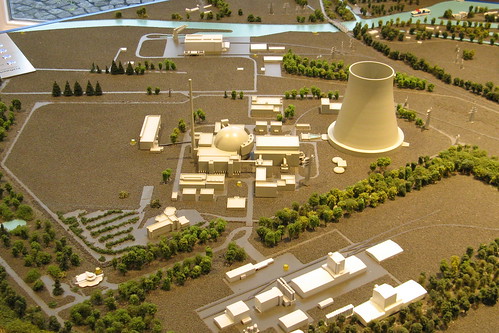
Over the last couple of years, my thinking has evolved on this, and I am now in favor of giving nuclear power another chance. Here's why: climate change. Climate change makes the first issue balance out--unmitigated climate change results in environmental outcomes that last for thousands of years--the same timeframe as nuclear power (although different issues). On the second issue, the truth is time is running short, and we need to throw everything we have at climate change. That means some of the things we do will be "less economic" or "more economic" than others. The more we piddle around trying to find the perfect response, the longer we keep ourselves parked in the path of the climate-change freight train coming at us.

We need to do it all: renewable energy, international agreements, cap and trade, carbon taxes, energy efficiency, conservation, technology development, technology transfer, forest protection, forest replacement, land-use changes, biofuels, agricultural transformation, carbon capture, transportation system redesign, behavior changes, and everything else. Nuclear power is one of the things we have to have on the table along with all these others, too. The new DOE Secretary, Steven Chu, agrees; many others do not (Kessler, Joel Makower, Amory Lovins [yow! I shouldn't be arguing with him!]). In the long run, as we transform our energy system, then I strongly advocate phasing out nuclear in favor of less risky energy generation technologies. Even in the shorter run, by putting a price not only on carbon but on other externalities, it may become apparent that nuclear will only play small role. But for now, we have to pursue every option and move forward aggressively on reducing our greenhouse gas emissions, including developing more nuclear power.
------------------
photo attributions: http://www.flickr.com/photos/flokru/ / CC BY-NC 2.0

If You Want to Go There, You Have to Have Gone There Before

One frustration that works against more people making new transportation choices is that the information being provided is directed at insiders--regulars--and is either not helpful or outright confusing to newbies.

I had this experience last summer on a trip to New York City. It has always been an interest of mine to ride on the Staten Island Ferry, just for the experience. The opportunity presented itself when I coordinated a drop off of my daughter and another pre-teen girl to a family in New York City, who would then take them to a camp out on Long Island. Part of the logistics included seeing The Lion King in New York, which was terrific.

The plan was to have the other girl's father drive us to the ferry; we would take the ferry to Manhattan and the subway up to the theater where we would meet our friends. All well and good.
We found the ferry terminal without incident and were pleased to find a subway card machine at the terminal, so that we could get our farecards before we boarded--a nice convenience. After our 20-minute wait we hear announced, "Now boarding: the 12:30 ferry to Whitehall at dock number 2." Whitehall? I've never heard of Whitehall. Where's that? I glance around the waiting area and see throngs of people heading over to board and about 10 others like me with uncertain looks on their faces. My daughter, with an anxious tone in her voice asks, "Are we getting on the right boat, Daddy?" Now I'm pretty sure that the Staten Island Ferry just runs between Staten Island and Manhattan, but I'm not 100% certain of that--especially right then. I look all around for some clue about Whitehall and finally spot on the large schedule board the words "(Whitehall Terminal)" in parentheses. My anxiety level goes down, we get on the boat and everything goes smoothly from then on.

Now I don't think that the ferry is deliberately trying to confuse passengers or create angst, but that was the unintended consequence of the announcement for me and a dozen others (and probably almost every trip for at least a couple of new riders). The "insiders" do not need anything more than, "12:30 ferry now boarding." We newbies would benefit from something like, "The 12:30 ferry to Manhattan now boarding." Mentioning Whitehall provides no useful travel information to anyone: insiders already know where the ferry is going and we rookies are only confused by it. It also sends a signal--not so much that we newbies are not welcome--but that they just haven't given any consideration to thinking about us.
Those who provide transportation services need to constantly be putting themselves in the shoes of a brand-new user and trying to forget everything they already know. How can they make that experience simpler and the information clear and useful to that brand-new user?
For more on transportation on Staten Island, they have their own blog here.

Roger Lewis's Shaping the City - Stimulating Transit


I am a big fan of Roger Lewis's column that appears every other week in the Washington Post. Yesterday's column: All Aboard: Public Transit Deserves a Big Chunk of Stimulus starts out this way: "The share of President Obama's more than $800 billion economic stimulus package aimed at public transportation seems marginal, and that's a shortsighted approach to spending. Most of the money in the transportation portion is to stimulate work on roads and bridges. Relatively little is aimed at enhancing existing transit or launching new transit projects." I highly recommend reading the whole column.

He goes on to discuss how using stimulus money to fund more roads and bridges may be stimulative but works against the long term goals of redesigning the way we transport goods and people to better serve our society and environment.

I agree with him on almost all points, and definitely agree that our transportation priorities need to shift us to more sustainable models of development and transportation. However, I think our leaders need to be deliberate about how money in the stimulus package is spent. I am not an economist, but my understanding is that the point of the stimulus package is to pump money into the economy in the short term. So insomuch as investments in transit can result in money actually entering the economy in the next 18 months, I am supportive (including putting money into operating expenses, e.g., helping to cover WMATA's budget shortfall this year). But if that money is for more long term investments then, yes, they should probably still be funded, but not as part of the stimulus bill.

[cross posted on Greater Greater Washington]

Fuel Taxes/Price vs. Efficiency Standards

The Obama administration has thankfully changed course from the previous adminstration and is allowing California to set greenhouse gas requirements for cars (essentially creating fuel efficiency standards). Much of the reason cars have continued to be built so inefficiently is because fuel costs have been very low for a long time. I agree with the idea that increasing fuel prices will reduce miles driven and will also help drive the market for more efficient cars, but higher fuel prices (through taxes or other means) will not drive the market for more fuel efficient cars all by themselves. Efficiency requirements must be part of the policy, too.
Here's why.
  • Decisions about fuel efficiency are made by car manufacturers.
  • Car manufacturers sell their cars to new car buyers.
  • New car buyers are wealthier than the population as a whole and fuel costs make up a smaller portion of their income and spending. ($85,000 avg. household income for new car buyers in 2003 according to J. D. Power)
Therefore new car buyers are less influenced by fuel prices than used car buyers and lower income households are--the ones who are most affected by higher fuel prices. New car buyers often consider other features: safety, GPS, style, perceived utility, etc. ahead of fuel efficiency--even at $4 or $5 per gallon. Cars that are built this year will exist for 13-17 years through several owners and their fuel efficiency is locked in for the life of the car.

If fuel prices are raised high enough (say, $7-$8 gallon) to affect the purchasing decisions of new car buyers, the buyers of used cars will be bearing the brunt of the high priced fuel, because they will own the less efficient, older cars.

Transform to Sustainability Created

This blog, Transform to Sustainability, comes into existence today, January 16, 2009 as the official blog for Steve Offutt, market transformation expert and environmentalist.
I have imported my blog posts from CommuterPage, GreaterGreater Washington and Arlington's AIRE blog, which all appear below.