Arlington County has been removing some of the dangerous bollards and collars that riders have identified on the bollard map, which is here:
View Arlington Bollards in a larger map
Last week I noted that the two bollards on the connector from N. Van Buren St. to the Custis/W&OD, just east of Lee Highway and west of the East Falls Church Metro station, have been removed and new pavement has been smoothly added. I updated the Bollard map to show this change. Please check out my previous post on why bollards are mostly unnecessary.
If you have noted other bollards or collars (or other similar hazards) on Arlington's trails, please add them to the map. Please also note any bollards that have now been removed, as I did.
Kudos to Arlington for using the information provided through this public forum to improve cycling for all of us.
===============================
Steve Offutt is a member of the Arlington Bicycle Advisory Committee

Transforming the market for electric cars: The solution to "Range Anxiety"
Building the market for electric cars presents a tricky conundrum: charging. People are less likely to want to buy an electric car if they are uncertain about being able to get it charged, and charging stations are not likely to pop up to serve these vehicles if there are few electric cars around. This fear of running out of charge, "range anxiety," is a significant obstacle to more widespread adoption. I believe a forward-looking gas company can help break this logjam while also improving their market positioning. Here's how.

Suppose one company, let's say Shell, installed chargers in every one of their stations in the Greater Washington area (or another region where there are electric cars on the road). The key here is to install in every station, even though many will hardly get used. It's a marketing strategy: make your stations synonymous with electric charging. One company getting out ahead on this could create a very long lasting market advantage. Put a charger in every station and make that information common knowledge to everyone. The marketing has to be comprehensive, so that everyone knows those gas stations have charging stations; it becomes common knowledge. The stations and the marketing are loss leaders; a marketing strategy that pays off in more than one way.
Suppose one company, let's say Shell, installed chargers in every one of their stations in the Greater Washington area (or another region where there are electric cars on the road). The key here is to install in every station, even though many will hardly get used. It's a marketing strategy: make your stations synonymous with electric charging. One company getting out ahead on this could create a very long lasting market advantage. Put a charger in every station and make that information common knowledge to everyone. The marketing has to be comprehensive, so that everyone knows those gas stations have charging stations; it becomes common knowledge. The stations and the marketing are loss leaders; a marketing strategy that pays off in more than one way.
Robert Samuelson redefines "reassuring," downplays seriousness of climate change
In a short op-ed piece today in the Washington Post (January 26, 2012), Robert Samuelson invokes a strange reality on our future.
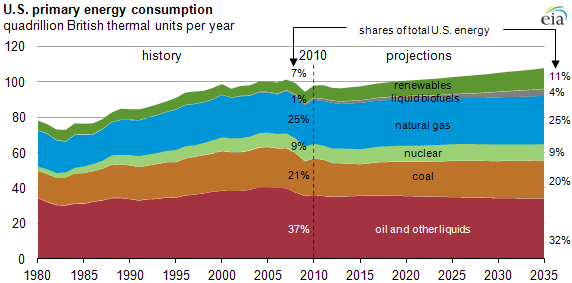 That's how he starts the article. Not that he supports the canceling of the KXL pipeline. No, he's optimistic because we will continue to burn fossil fuels on into the interminable future no matter what. That's the "better than you think" line.
"A week after President Obama denied the application for the Keystone XL pipeline — which would carry oil from Canada’s tar sands deposits in Alberta to U.S. refineries along the Gulf of Mexico — it’s time for an energy reality check. What does the future hold? It may be better than you think."
Royal Netherlands Embassy achieves LEED Silver

The project started in the spring of 2010 and was completed in June of 2011. Preliminary review by the Green Building Certification Institute (the official certifying body) was followed by a re-submittal of additional documentation in September. This re-submittal resulted in 49 points, just one shy of Silver. We were able to successfully appeal one credit to achieve the necessary 50 points.
Ped/Bike bridge replacement will improve connection from W&OD to East Falls Church
Arlington County is replacing the footbridge across Four Mile Run that connects the
W&OD/Custis Trail east of Sycamore Street with the East Falls Church Metro station. The current footbridge is very narrow, very old and has become obsolete. Its replacement is necessary for safety reasons. However, with input from the Arlington County pedestrian and bicycle advisory committees, the County has taken advantage of this opportunity to improve the bridge. The replacement bridge will meet ADA standards, will be wider and is in a better location for reducing confusion among trail users.
 |
| Existing bridge as approached from the east |
I-66 "Spot Improvement" now completed
 |
| I-66 looking westbound from Ohio St. |
Arlington looking for help with bollard locations
Arlington County has created a public Google Map that people can edit with bollard locations and issues.
View Arlington Bollards in a larger map
In particular, they are asking for locations where bollard collars (that part in the ground that holds the bollard itself) may be sticking up causing a hazard. Since we have the map, it will also be useful for identifying other bollard-related locations, such as where bollards are needed or where they should be removed.
I have posted on this topic before (here and here). Those who know me know that I am opposed to bollards in general and believe they should only be installed where there is documented need, rather than at every intersection just as a policy. The W&OD trail removed all its bollards along the entire 45 miles some years back and experiences few problems with cars. Not zero, though. However, they have decided that the positive aspects of better aesthetics and safer travel for cyclists outweigh the negatives of a rare car encroaching on the trail.
Please check the map out and add any locations that you believe could use attention. It's easy, just click on the EDIT button and you will be able to edit the map. Remember to save when you are done. Thanks for your help.
On-street Crescent Trail will be worse for bikes and peds
(This is an unedited cross post from Greater Greater Washington)
This post is in response to a Greater Greater Washington post from Dan Reed: On-street Crescent Trail may be better for bikes and peds
I disagree with almost everything Mr. Reed suggests in his post.
For a year or so I commuted through that tunnel almost every day. It is an excellent amenity.
Mr. Reed suggests that the on-street alternative may be safer because of the likelihood of crime, and he points out crime problems at other bike/ped facilities. This is a red herring argument. The tunnel has been open since 1998 and crime has not been an issue. Undoubtedly it will be even less so with greater usage. The safety benefit of not having to cross Wisconsin Avenue at grade is much greater than any potential danger associated with crime.
New bridge design serves pedestrians and cyclists better

Arlington County has chosen a design (pdf) for its upcoming rehabilitation of the Carlin Springs bridge over George Mason Drive.
The current bridge has five-foot sidewalks and no accommodation for cyclists. The new bridge will have 8-foot sidewalks and 5-foot bike lanes on both sides. The rest of Carlin Springs Drive does not currently have bike lanes, but it is important to plan for the future by including them now. Had the County not included better bike/ped accommodations, then those decisions would have been difficult to change for 30 or more years.
Skeptics are not statisticians: 1% of a data set does not disprove the whole data set.
A friend of mine likes to provoke me by sending links to posts and articles that contradict the established science on climate change. Recently he pointed me to this post that appeared in Watt's Up With That: NCDC data shows that the contiguous USA has not warmed in the past decade, summers are cooler, winters are getting colder. My friend accompanied this link with this comment:

I countered with some points, but only later realized the biggest flaw with this reasoning, which I'll get to shortly.
Well, the figures are in from the NOAA National Climate Data Center and the rest is just high school math. While US CO2 emission has gone up precipitously in the last 100 years the average temperature in the US has gone down. Of course you could look at just the last 15 years and ignore the rest. In this case CO2 has still gone up a lot and temperature was flat. Does this fit with saying the controversy is over and global warming is an established fact.
I countered with some points, but only later realized the biggest flaw with this reasoning, which I'll get to shortly.
Note to Carol Browner: Even if the idea is right, you gotta make sure it's backed by the truth
Carol Browner was quoted in the Washington Post on Sunday. The quote was from an energy conference held in Washington a week earlier. Here's the quote in its entirety:
People like to pooh-pooh regulations and suggest that, somehow or another, regulations are not good for business. But, in fact, regulations can create business certainty and business opportunity. When the government puts in place a requirement and standard, that means there’s the certainty of a return on capital investments.

And we have a long history in this country of doing just that. If you go back to 1990 when the Congress decided to ban chlorofluorocarbons, CFCs, a market opportunity was created. And we found a solution or a replacement for CFCs, which were dangerous to the upper ozone, and we did it more cheaply and more quickly than anyone anticipated.
Some in this industry and the natural gas exploration extraction industry have not been as forthcoming as others. . . . I would just encourage the industry to be as transparent as possible in an effort to ensure that this is a thoughtful discussion about how we move forward.
"Natural" equals Magic
 |
| photo from Purple Phoenix on flickr |
A friend of mine, in fact, has invoked this same idea to me: that climate change is some sort of natural artifact. This is the equivalent of saying that what is happening is caused by magic.
Farragut "Virtual" Tunnel (Farragut Crossing) Now Operational
I don't know if I should claim any credit for this finally happening, but I have been fairly vocal about it for a long time on several forums. Finally on Saturday, October 29, 2011, the "Farragut Crossing" virtual/invisible tunnel transfer option began between Farragut North and Farragut West stations.

Here's the first line from my original post below:
For history buffs, here's a comprehensive listing of all my posts and some other relevant links.
Here's the first line from my original post below:
"I can't take credit for this idea--I read it somewhere else--but it's so good that it needs to be promoted and publicized until Metro takes notice and implements it."That was August 30, 2008, 38 months ago. I'm glad to see it finally happened, but it's a bit discouraging to see that a no-brainer idea like this one can take so long. Imagine how long something expensive or contentious would take.
For history buffs, here's a comprehensive listing of all my posts and some other relevant links.
Kids keep getting smarter. More and more bicycling to school.
Twice in the past (here and here) I reported on the bikes that were parked in the racks at Swanson Middle School in Arlington. Two years ago there were thirteen. Last year there were eighteen, and they had expanded the racks. This year on bike-to-school day there were twenty-one, and as you can see in the photos below, they are just about out of room in the bike racks again. One rider's bike is parked on a nearby tree.
It's great to see more and more school kids riding bikes to school (and some staff, too). There are about 800 students and staff at Swanson, so these bikes represent 2-3% of the total population.
\
It's great to see more and more school kids riding bikes to school (and some staff, too). There are about 800 students and staff at Swanson, so these bikes represent 2-3% of the total population.
| Bike racks are full on bike to school day 2011 |
| One cyclist's bike is parked on the tree due to full racks |
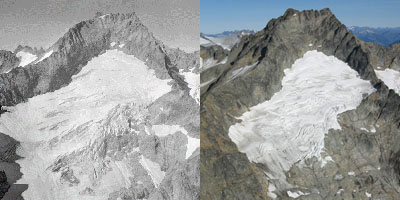
State of Folly 5 - How Crichton is wrong about glaciers
This is the fifth in a series of posts related to Michael Crichton's State of Fear, which I just read this summer. [previous posts here and here and here and here]
From page 530, a conversation between Kenner and Ted Bradley:
From page 530, a conversation between Kenner and Ted Bradley:
"How many glaciers are there in the world, Ted?"
"I don't know." "Guess."
"Maybe, uh, two hundred."
Subscribe to:
Posts (Atom)

 Posts

